

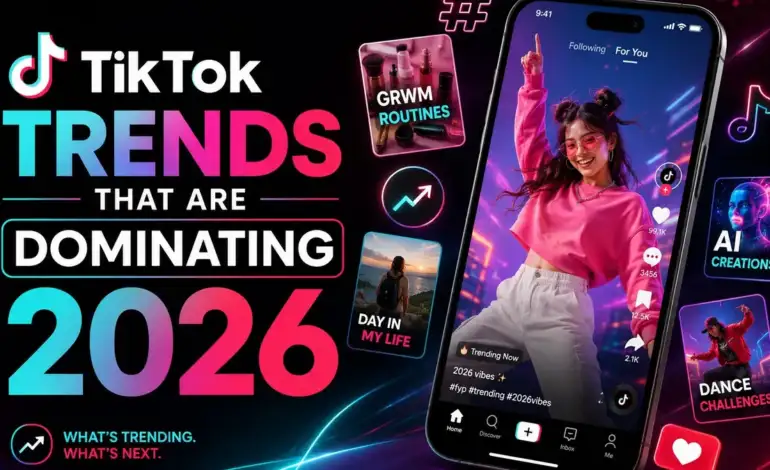
TikTok Trends That Are Dominating 2026

TikTok in 2026 looks very different from the platform that built its reputation on dance challenges and lip sync clips. The trends defining this year are less about a single sound or movement and more about a shift in what audiences expect from the content they watch. People want honesty over polish, substance over spectacle, and creators who feel like real people rather than advertising channels.
Understanding the TikTok trends that are dominating 2026 is no longer optional for anyone who wants to grow on the platform. The For You Page rewards a specific kind of content this year, and the creators and brands paying attention are pulling ahead of those still using last year’s playbook.
This guide breaks down the trends shaping TikTok right now, explains why each one took off, and outlines exactly how you can apply them. Whether you run a brand account, build a personal following, or manage social media for clients, the patterns below will help you create content that actually performs.
Key Takeaways
- Authenticity is the master trend of 2026. Raw, unpolished, honest content is beating glossy, over-produced videos across almost every niche.
- AI is everywhere, so human personality is the real advantage. Use AI as a backstage tool, but never let it replace your voice.
- TikTok is a search engine now. Optimize for social SEO by speaking keywords, using on-screen text, and writing clear captions so people can find you over time.
- Slow living and “going analogue” are resonating hard. Cozy, intentional, screen-time-reducing content is having a real moment.
- Micro-creators and niche communities carry more trust than mega-influencers. Small and loyal beats big and passive.
- Shoppers are buying with intention, not impulse. Explain the “why to buy” and show the product working honestly.
- Move fast, adapt instead of copying, hook viewers instantly, and stay consistent. That combination beats chasing one viral fluke.
Why TikTok Feels So Different This Year
Let’s set the scene, because context matters.
For the last couple of years, two things happened at the same time. First, AI video tools got genuinely good. Really good. You can now generate a fake baby giving a TED talk, a fake Love Island made entirely of fruit, or a hyper-realistic clip of something that never happened, all in a few minutes. Second, everyone realized this at once and started flooding the platform with it.
The result is what people have started calling “AI slop.” Endless, generic, soulless content pumped out at scale because it’s cheap and easy. And here’s the interesting part: instead of impressing people, the slop did the opposite. It made everyone crave the real thing even more.
That’s the engine behind almost every major trend in 2026. When fake is everywhere, real becomes valuable. When polished is the default, messy becomes refreshing. The whole vibe of the platform has tilted toward honesty, and the trends reflect that.
So when we talk about what’s dominating, we’re not just talking about individual viral moments. We’re talking about a shift in taste. And once you understand the shift, the specific trends start to make a lot more sense.
The Big Trends Dominating TikTok in 2026
Let me walk you through the trends that genuinely matter this year. Some are cultural moods. Some are content formats. Some are just dumb fun. All of them are shaping what lands on the For You Page.
1. The Death of Perfect: Raw, Unfiltered Content Wins
If there’s one trend that rules them all, it’s this one.
The era of the perfectly lit, color-graded, scripted-to-death video is fading fast. What’s winning now is content that looks like a friend filmed it. Shaky camera. Real lighting. A face that hasn’t been smoothed into a porcelain mask. People are showing the messy middle of things, the burnt dinner before the good one, the seven failed takes, the apartment that isn’t spotless.
Why does this work? Because it earns trust. When you’ve been burned by a thousand fake-perfect posts, the creator who shows the actual process feels like the only honest person in the room. And honesty is sticky. People watch longer, comment more, and come back.
For creators, the practical lesson is almost freeing: stop over-producing. The video you almost didn’t post because it “wasn’t polished enough” is often the one that hits. For brands, it means dropping the glossy commercial energy and showing real people, real use, real mistakes. The audience can smell a stock photo from a mile away.
2. AI Content Is Everywhere, So Being Human Is the Flex
Here’s the paradox of 2026. AI-generated video has gone fully mainstream, and yet the most successful content is the stuff that’s unmistakably made by a person.
You’ll see AI everywhere on your feed. AI babies, AI memes, AI-generated worlds, AI voices reading scripts. Some of it is genuinely creative and fun. A lot of it is forgettable filler. The audience has gotten very good at telling the difference, and they reward the human stuff with attention.
This doesn’t mean you should avoid AI tools entirely. Use them to speed up editing, brainstorm hooks, or clean up your captions. That’s smart. But don’t outsource your personality to a machine, because personality is the one thing the machine can’t fake convincingly yet. The creators growing fastest right now use AI as a backstage assistant, not a front-stage performer.
Think of it like this: AI can help you cook faster, but people still want to know a human made the meal.
3. TikTok Search Is the New Google
This might be the most underrated trend on the entire list, and it’s the one I’d pay the most attention to if you care about long-term growth.
People don’t just scroll TikTok anymore. They search it. “Best running shoes for flat feet.” “How to fix a leaky faucet.” “Quiet places to eat in Lahore.” For a huge and growing number of users, especially younger ones, TikTok has replaced the traditional search bar. They’d rather watch a real person explain something than read ten articles trying to sell them something.
What’s fascinating is how the searching unfolds. Someone comes in looking for one thing and tumbles down a rabbit hole of related discoveries they never planned on. You search for a recipe and forty minutes later you’re deep into the history of a regional spice. That curiosity spiral is now a core part of how the app works.
For creators and businesses, this changes everything. You should be thinking about social SEO, which is just a fancy way of saying: say the keywords out loud, put them in your on-screen text, and write captions that match what people actually type. If someone might search for it, make sure your video answers it clearly. Don’t keyword-stuff like a robot, but don’t be vague either. A video titled “vibes ✨” tells the algorithm nothing. A video that says “three cheap dinners under 20 minutes” tells it everything.
4. Going Analogue: The Anti-Screen-Time Movement
Here’s a trend that’s almost funny when you think about it. One of the biggest movements on TikTok in 2026 is people using TikTok to talk about using their phones less.
It’s called “going analogue,” and it’s exactly what it sounds like. Buying a film camera. Reading paper books. Writing in a physical journal. Picking up “offline” hobbies like pottery, knitting, or hiking. There’s a real hunger for slowness, for things you can touch, for a life that isn’t mediated through a glowing rectangle.
The irony isn’t lost on anyone, and that’s part of the appeal. People are documenting their digital detox on the most addictive app ever made. But the underlying desire is sincere. Burnout is real, and a lot of people are quietly deciding that the always-on life isn’t worth it.
If your content or brand touches anything calming, intentional, or hands-on, this is your moment. Cozy aesthetics, slow living, analog hobbies, and “touch grass” energy are resonating hard. The audience wants permission to log off, and they’ll happily follow whoever gives it to them.
5. The Goal-Setting Glow-Up: “26 Goals for 2026”
At the start of the year, a gentle little trend took over: people listing 26 goals for 2026. Not impossible, life-overhaul resolutions, but a realistic mix of small wins and quiet ambitions.
The list might include “read 12 books,” “stop doomscrolling past midnight,” “learn to poach an egg,” and “call my grandmother more.” The magic was in the lack of pressure. Nobody was promising to become a billionaire or run a marathon by March. They were just being intentional about getting one percent better.
This taps into something deeper than a content format. People are exhausted by hustle culture and the constant pressure to optimize every second. The 26-goals trend gave them a softer, kinder way to want more from life without hating themselves for not having it yet. That emotional honesty is exactly why it spread.
6. Micro-Creators Are Beating the Big Names
For a long time, the dream was to go mega-viral and rack up millions of followers. In 2026, the smart money is on the opposite.
Smaller creators, the ones with tight, passionate niche communities, are quietly outperforming huge influencers when it comes to trust and actual influence. If someone with 8,000 followers who only posts about cast-iron cooking recommends a pan, their audience listens. They feel like a friend, not a billboard.
Brands have figured this out. Instead of dropping a fortune on one celebrity, they’re working with dozens of small, credible voices who genuinely care about their corner of the internet. The reach might be smaller per post, but the trust is enormous, and trust is what actually moves people to act.
If you’re a creator, don’t be discouraged by a small following. A loyal community of a few thousand people who actually care is worth more than a million passive scrollers. And if you’re a business, look for the niche voices in your space before you chase the big names.
7. Intentional Shopping: “Why Should I Buy This?”
TikTok Shop is still growing fast, but the way people buy has matured. The frantic, impulsive “add to cart because a stranger told me to” energy is cooling off. In its place is something more thoughtful.
In 2026, impulse is losing to intention. People are buying more deliberately, and they reward the brands and creators who clearly explain the “why.” Not “this is cute, buy it,” but “here’s exactly what problem this solves and who it’s for.” Shoppers are weighing emotional payoff as heavily as price. They’re not necessarily looking for the cheapest option. They’re looking for the right one.
There’s also a clear pattern in how purchases happen now. People often discover a product somewhere else, from a friend, in a store, or from an AI assistant, and then come to TikTok to validate it. They want to see a real person use it before they commit. That makes honest reviews and genuine demonstrations incredibly powerful right now.
So if you sell anything, your job isn’t to hype. It’s to justify. Show the product working. Show who it’s for. Show the before and after. Earn the click instead of begging for it.
8. The Chaos Memes (Because We Still Need to Laugh)
Not everything in 2026 is deep and intentional. Thank goodness. Alongside all the soul-searching, the platform is still gloriously, beautifully unhinged.
The “skeleton banging shield” meme became one of the first big jokes of the year, used to represent every chaotic, overwhelming situation in life. People did “owl impressions” imagining how an owl would hoot if it were from a specific country or were a particular celebrity. There was the pickle dip that jumped from a Super Bowl snack to a full-blown food obsession. And the “my top five horror movies” format turned a simple list into endless debate.
These trends don’t need a grand explanation. They’re fast, relatable, easy to copy, and fun. And that’s the point. In a year where so much content is trying to teach you something or sell you something, the pure silliness is a relief. Humor is still one of the strongest growth engines on the app, full stop.
The lesson for creators is simple: don’t be so serious that you forget to play. The chaos memes spread because they’re low-pressure and high-joy. Jump on them while they’re fresh, add your own twist, and don’t overthink it.
How to Actually Use These Trends (Without Looking Desperate)
Knowing the trends is one thing. Riding them well is another. There’s nothing worse than a brand or creator showing up to a trend three weeks late, missing the joke, and trying way too hard. We’ve all cringed at it.
So here’s how to do it right.
Move fast, but only on trends that fit you. Most TikTok trends peak within one to three weeks. If you spot something that genuinely matches your niche, jump in quickly. But don’t force it. Forcing a trend that has nothing to do with your world is more damaging than skipping it. The audience can tell when you’re chasing relevance.
Adapt, don’t copy. The creators who win don’t just recreate a trend beat for beat. They take the format and bend it to their own world. A bookstore could do the “26 goals” trend as 26 books to read in 2026. A mechanic could do “owl impressions” but with car engine sounds from different decades. The trend is the skeleton. Your personality is the flesh.
Nail the first two seconds. Attention spans are brutal right now. Your opening has to grab someone before their thumb moves. Lead with the hook, the surprise, or the question. Save the slow build for somewhere else, because on TikTok, the slow build is where people leave.
Stay consistent over trying to go viral. One lucky viral video feels great and then disappears. Showing up regularly, posting content people can rely on, and building a real relationship with your audience is what actually grows an account in 2026. The algorithm rewards momentum more than miracles.
Talk to people, not at them. Comments and conversations matter more to the algorithm than passive likes this year. Ask real questions. Reply to comments. Make content that begs to be discussed. A video that sparks a thousand arguments in the comments will travel further than one that gets quietly liked.
A Quick Word on What’s Coming Next
If the trends dominating 2026 share one DNA strand, it’s the craving for what’s real. As AI gets more capable and the feed gets more crowded, that craving is only going to intensify.
My honest read is this: the creators and brands who win the rest of this year won’t be the ones with the fanciest gear or the cleverest AI prompts. They’ll be the ones who show up as actual humans, who say true things, who let their audience see a little mess and a little personality. The bar isn’t production quality anymore. It’s sincerity.
That’s a strangely hopeful place for a social media platform to land. After years of everyone performing a flawless life, the thing that’s finally working is just being a person.
Frequently Asked Questions
What are the biggest TikTok trends dominating 2026?
The biggest TikTok trends that are dominating 2026 center on authenticity and realness. Raw, unfiltered content is beating polished videos. AI content is everywhere, which has made genuinely human content stand out more. TikTok search is replacing Google for younger users, “going analogue” and slow living are huge, micro-creators are outperforming big influencers, and shopping has become more intentional. Mixed in with all of that are the usual chaotic, fun memes that keep the platform entertaining.
Why is authentic content doing so well on TikTok this year?
Because the feed is flooded with AI-generated content and over-produced videos, people have started craving the real thing. When everything looks fake or perfect, honesty becomes rare and valuable. Audiences trust creators who show the messy process, real reactions, and unscripted moments. That trust translates into longer watch times, more comments, and stronger loyalty, which the algorithm loves.
Should I use AI to make TikTok videos in 2026?
Use it as a helper, not a replacement. AI tools are great for speeding up editing, brainstorming hooks, writing captions, or generating ideas. But the content people actually connect with still feels human. If you let AI do all the talking, your videos blend into the endless wall of generic content. Keep your personality front and center and let AI handle the boring backstage work.
Is TikTok really being used as a search engine now?
Yes, and it’s one of the most important shifts of the year. A growing number of users, especially Gen Z, search TikTok for product recommendations, how-to guides, local spots, and reviews instead of typing into a traditional search bar. This is why social SEO matters so much. Saying clear keywords out loud, adding them as on-screen text, and writing descriptive captions helps your videos get found long after you post them.
How long do TikTok trends usually last in 2026?
Most trends peak within one to three weeks, though some sounds and formats hang around longer if they keep gaining momentum across other platforms too. Trends are moving faster than ever, so the trick is jumping in while something is still fresh on the For You Page. If you’ve already seen a trend everywhere for a month, you’re probably too late to add anything new to it.
Do small creators have a real chance against big influencers?
Absolutely, and arguably more than ever. Micro-creators with small but passionate niche communities are earning more trust than massive influencers. A recommendation from someone who feels like a knowledgeable friend carries serious weight. If you focus on serving a specific community really well, your smaller audience can be far more powerful than a huge, disengaged following.
What’s the best way to grow on TikTok right now?
Show up consistently, be genuinely yourself, hook viewers in the first two seconds, and make content that sparks conversation. Pick trends that fit your niche, adapt them with your own twist instead of copying, and pay attention to TikTok search so people can find you over time. The combination of authenticity and consistency beats chasing one-off viral hits.


