The best running shoes for flat feet should give you a comfortable, secure place to land without forcing your arch into a shape it does not like. That is a more useful buying goal than chasing the firmest support or the thickest cushioning. Some runners prefer a guided stability shoe; others feel comfortable in a neutral trainer. Your arch height alone does not decide the answer.
For runners who want added guidance, this shortlist compares ten road-running shoes with different approaches to support. The Brooks Adrenaline GTS 25 is our overall starting point, while the New Balance Fresh Foam X 860v15 deserves attention if width selection is your main concern. Below, we explain why each pair makes the list, what could rule it out and how to compare it with the alternatives.
If you are still deciding between everyday trainers, workout shoes and race-day options, our best running shoes guide covers that broader choice. This guide focuses on buying a supported daily trainer for runners with low arches.
Our Top Picks
| Best for | Product | Shop | Review |
|---|---|---|---|
| Best Overall | Brooks Adrenaline GTS 25 | CHECK PRICE ON AMAZON → | Jump to review → |
| Best for Long Runs | ASICS GEL-KAYANO 32 | CHECK PRICE ON AMAZON → | Jump to review → |
| Best Versatile | ASICS GT-2000 14 | CHECK PRICE ON AMAZON → | Jump to review → |
| Best Daily Training | Saucony Guide 19 | CHECK PRICE ON AMAZON → | Jump to review → |
| Best Maximum-Cushion | Saucony Hurricane 26 | CHECK PRICE ON AMAZON → | Jump to review → |
| Best Streamlined Stability | HOKA Arahi 8 | CHECK PRICE ON AMAZON → | Jump to review → |
| Best Broad-Platform | HOKA Gaviota 6 | CHECK PRICE ON AMAZON → | Jump to review → |
| Best Wide-Fit | New Balance Fresh Foam X 860v15 | CHECK PRICE ON AMAZON → | Jump to review → |
| Best Plush | Brooks Glycerin GTS 23 | CHECK PRICE ON AMAZON → | Jump to review → |
| Best for Treadmill Sessions | Nike Structure 26 | CHECK PRICE ON AMAZON → | Jump to review → |
Choose two or three models that match your priorities rather than trying to rank all ten for your feet. Width, arch comfort and heel security should eliminate unsuitable pairs before brand loyalty or color makes the decision.
Best Overall Running Shoes for Flat Feet: Brooks Adrenaline GTS 25
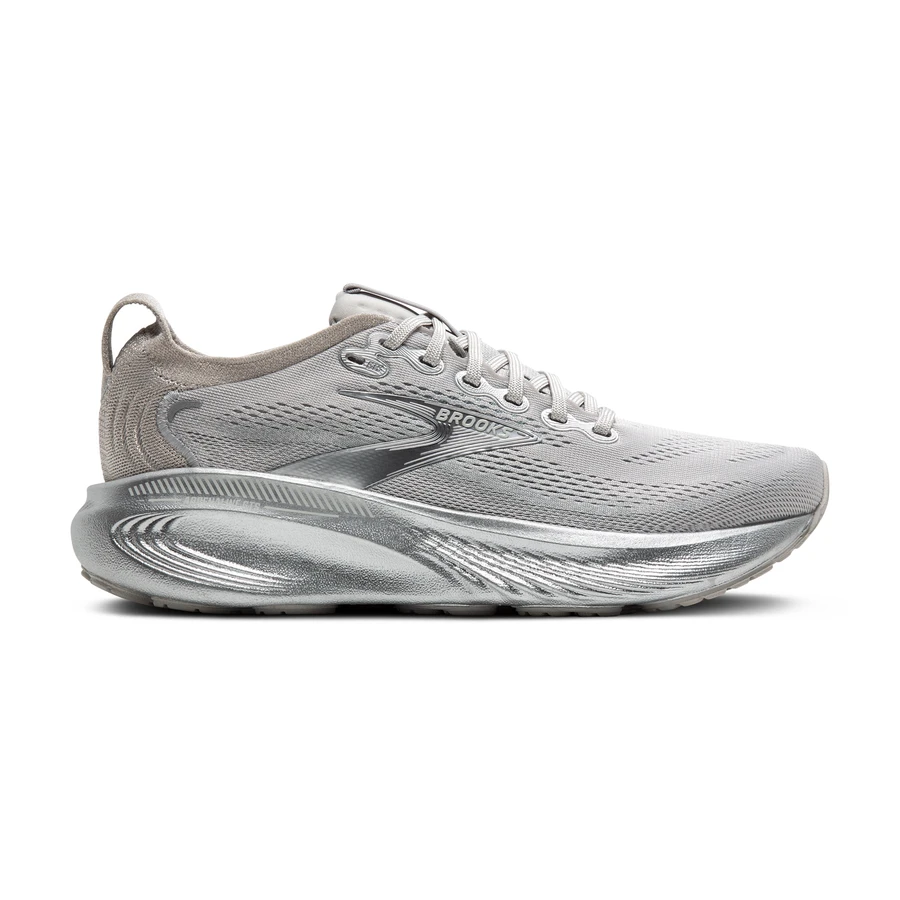
Why we recommend it: The Brooks Adrenaline GTS 25 is our starting point for runners who want one supportive shoe for ordinary training rather than a specialist pair for speed or maximum cushioning. Its GuideRails system and balanced cushioning make it a sensible reference when comparing the rest of this list.
Brooks combines nitrogen-infused DNA LOFT v3 cushioning with support designed to limit excess movement. The 10 mm drop also distinguishes it from several lower-drop options here. Neither feature makes it automatically better for a low arch, but together they give shoppers a clearly defined alternative to a soft, minimally structured neutral trainer.
The buying decision is whether that support feels comfortable through your own stride. When trying the Adrenaline, pay particular attention to the inside edge of your midfoot. You want a secure fit without a hard ridge pressing into the arch. A low arch should not have to tolerate an uncomfortable shoe simply because its label says stability.
We give it the overall position because its everyday role is straightforward: short runs, regular road mileage and run-walk sessions. If your priority is a plush long-run shoe, compare the Glycerin GTS 23 before paying for the Adrenaline. If you dislike the amount of shoe around your foot, the GT-2000 14 is another useful comparison. The winner should be the pair you can wear comfortably, not the one with the strongest support claim.
Key specifications
- Support: GuideRails
- Cushioning: DNA LOFT v3
- Heel-to-toe drop: 10 mm
- Design and use: Road running and walking; structured support; mesh upper
What we like
- Clear everyday-training purpose rather than a narrowly specialized design.
- GuideRails support paired with balanced cushioning.
- A useful higher-drop comparison against the 6–8 mm options.
Potential drawbacks
- Its structured feel may be unnecessary if you run comfortably in neutral shoes.
- Runners seeking a lightweight workout shoe should compare alternatives.
Who should buy it: Runners with low arches who prefer structured support and want a versatile daily road shoe.
Who should consider another option: Shoppers who feel midfoot pressure during a try-on or want a particularly plush or fast-feeling trainer.
Best Running Shoes for Flat Feet for Long Runs: ASICS GEL-KAYANO 32
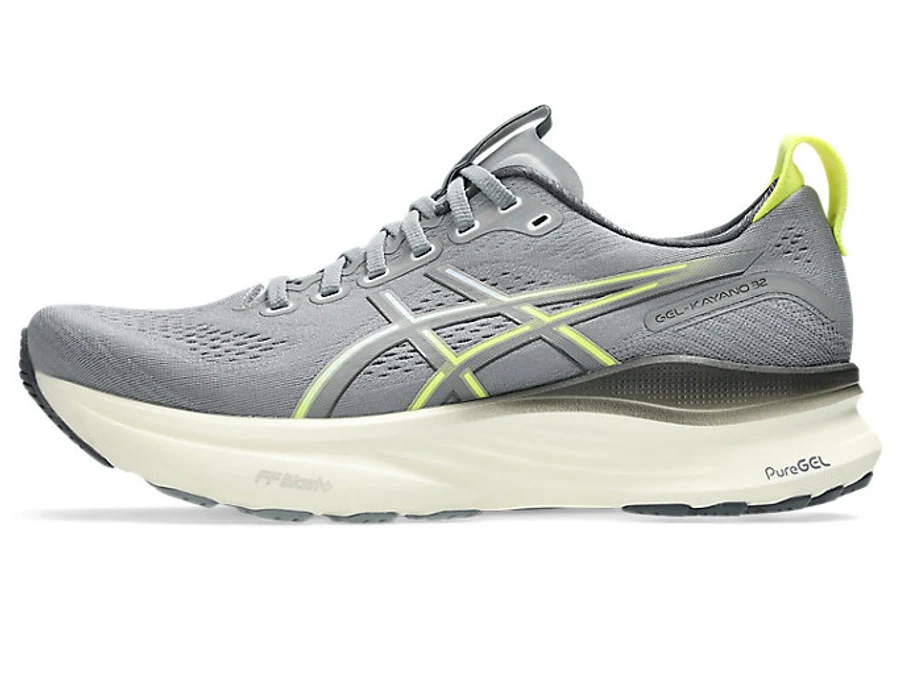
Why we recommend it: The ASICS GEL-KAYANO 32 earns its place for runners who prioritize cushioning and adaptive support over a stripped-back training feel. It is the pair to compare when your longer runs call for a more substantial shoe.
The design combines FF BLAST PLUS foam, rearfoot PureGEL and ASICS’ 4D GUIDANCE SYSTEM. The updated upper also includes a reinforced tongue wing intended to improve medial midfoot support. That makes the fit through the arch especially relevant: a supportive upper should hold the foot securely without feeling like a strap pulling it into an uncomfortable position.
The Kayano and GT-2000 solve different buying problems. ASICS positions the Kayano toward a softer, more cushioned experience, while the GT-2000 is the more streamlined option. For a shopper planning mostly easy mileage and steadily increasing the length of a weekend run, we would compare the Kayano first. For shorter sessions and a less substantial shoe, we would start with the GT-2000.
Do not choose the Kayano just because it sits in a premium product line. Extra cushioning is useful only if you enjoy the feel and can hold a secure heel position. Try it with the socks you run in, walk briskly and check that the forefoot is not being squeezed. If the upper feels good but the underfoot support feels distracting, a different stability system may be the better purchase.
Key specifications
- Support: 4D GUIDANCE SYSTEM
- Cushioning: FF BLAST PLUS with rearfoot PureGEL
- Heel-to-toe drop: Not listed here; verify selected US listing
- Design and use: Cushioned road trainer; engineered mesh; HYBRID ASICSGRIP outsole
What we like
- Cushioning and support are both central to its design.
- A distinct long-run option alongside the more streamlined GT-2000.
- Midfoot-focused upper construction gives buyers a meaningful fit checkpoint.
Potential drawbacks
- Its substantial training role will not appeal to everyone.
- A premium position is difficult to justify if a simpler trainer fits better.
Who should buy it: Runners seeking a cushioned, supported shoe for easy mileage and longer road runs.
Who should consider another option: Buyers who want a minimal daily trainer or feel concentrated pressure beneath the arch.
Best Versatile Running Shoes for Flat Feet: ASICS GT-2000 14
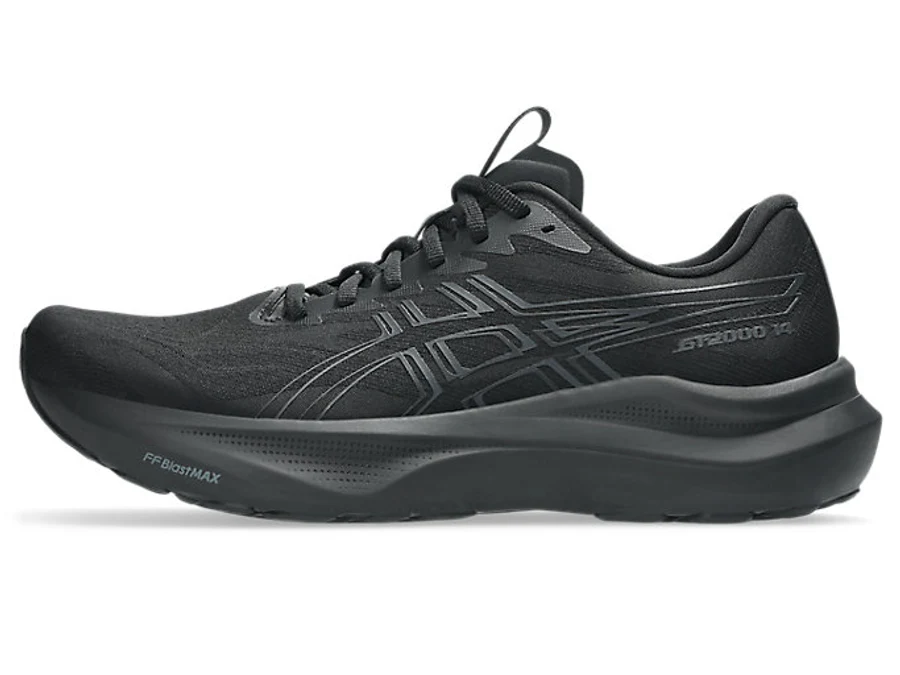
Why we recommend it: The ASICS GT-2000 14 is our versatile pick for shoppers who want guidance without automatically choosing the most substantial shoe in ASICS’ stability range. Its combination of daily-training cushioning and a more streamlined role deserves a side-by-side try-on with the Kayano.
ASICS uses full-length FF BLAST MAX cushioning, rearfoot PureGEL and its 3D GUIDANCE SYSTEM. The model also has an engineered woven upper and an asymmetrical tongue. Those details matter most through the middle of the foot, where a low arch can make the difference between a reassuring fit and a shoe that feels restrictive.
The practical reason to consider this pair is variety. A new runner may alternate short outdoor runs with treadmill sessions; a more experienced runner may want a dependable pair for ordinary weekday miles. We would shortlist the GT-2000 for either situation before moving to a more specialized maximum-cushion shoe. That is a buying recommendation based on its design and positioning, not a claim that it will suit every stride.
Compare the GT-2000 and Kayano in the same session if possible. Notice whether you prefer a more streamlined shoe or a fuller cushioning package, then compare actual fit rather than relying on the shared ASICS name. A supportive midsole cannot compensate for a slipping heel or a toe box that feels cramped. For buyers who already like an ASICS fit, the GT-2000 is a useful way to explore stability without assuming the most expensive model is necessary.
Key specifications
- Support: 3D GUIDANCE SYSTEM
- Cushioning: FF BLAST MAX with rearfoot PureGEL
- Heel-to-toe drop: Not listed here; verify selected US listing
- Design and use: Daily road trainer; engineered woven upper; forefoot outsole pod
What we like
- Daily-training design with a distinct role from the Kayano.
- FF BLAST MAX cushioning paired with adaptive guidance.
- A sensible shortlist option for mixed road and treadmill routines.
Potential drawbacks
- The upper and tongue still need an individual fit check.
- Runners seeking the fullest cushioning experience may prefer the Kayano.
Who should buy it: Runners who want a versatile supported trainer for regular everyday mileage.
Who should consider another option: Shoppers whose main priority is maximum cushioning or who dislike the fit through the midfoot.
Best Daily Training Running Shoes for Flat Feet: Saucony Guide 19
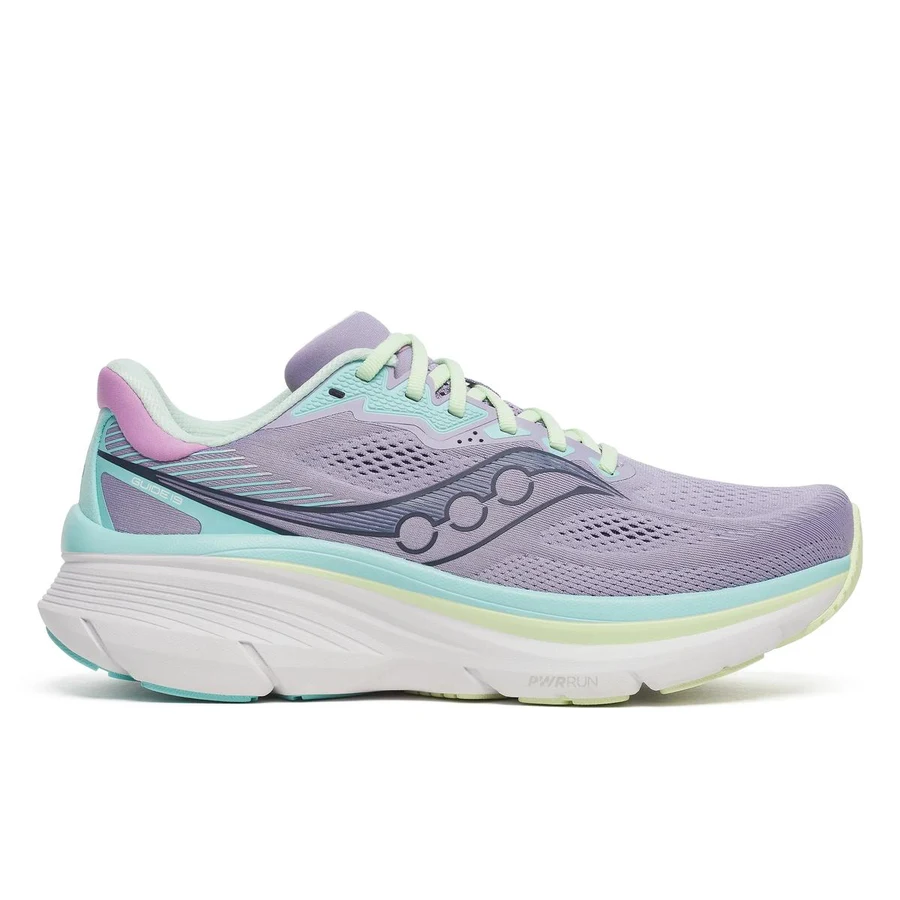
Why we recommend it: The Saucony Guide 19 is a practical daily-training option for runners who prefer support through the shape of the shoe and its sidewalls. It keeps the buying brief simple: cushioning, a secure upper and guidance for regular miles.
CenterPath uses sidewall guidance, while PWRRUN cushioning provides the underfoot platform. The 6 mm drop gives the Guide a different geometry from the Adrenaline GTS 25 and Nike Structure 26. That difference is worth noticing if you are replacing a shoe you already enjoy; changing the model and the drop at the same time can make the new pair feel quite different.
Our reason for choosing it here is its everyday focus rather than an assumption that every low arch needs aggressive control. A daily trainer should be comfortable at the pace you use most often. If most of your running is conversational rather than fast, evaluate the Guide during an easy jog, not only while standing still in a shop.
The comparison to make is with the Hurricane 26. Both use Saucony’s guidance approach, but the Hurricane puts a greater emphasis on maximum cushioning. Start with the Guide if you want an ordinary training shoe and do not have a strong preference for a very cushioned platform. Move to the Hurricane if its cushioning package is a specific feature you want. In either case, check that the sidewall does not push uncomfortably into the inside of the foot when you put weight on it.
Key specifications
- Support: CenterPath
- Cushioning: PWRRUN
- Heel-to-toe drop: 6 mm
- Design and use: Everyday road trainer; flexible mesh upper; guided sidewalls
What we like
- Straightforward daily-training purpose.
- CenterPath support avoids making a traditional firm post the whole buying story.
- A useful alternative for shoppers who prefer a 6 mm drop.
Potential drawbacks
- A lower drop will feel different from some familiar stability trainers.
- Buyers seeking maximum cushioning should also compare the Hurricane.
Who should buy it: Runners who want guidance for everyday mileage and prefer a regular daily trainer.
Who should consider another option: Shoppers who dislike the lower-drop geometry or want a maximum-cushion design.
Best Maximum-Cushion Running Shoes for Flat Feet: Saucony Hurricane 26
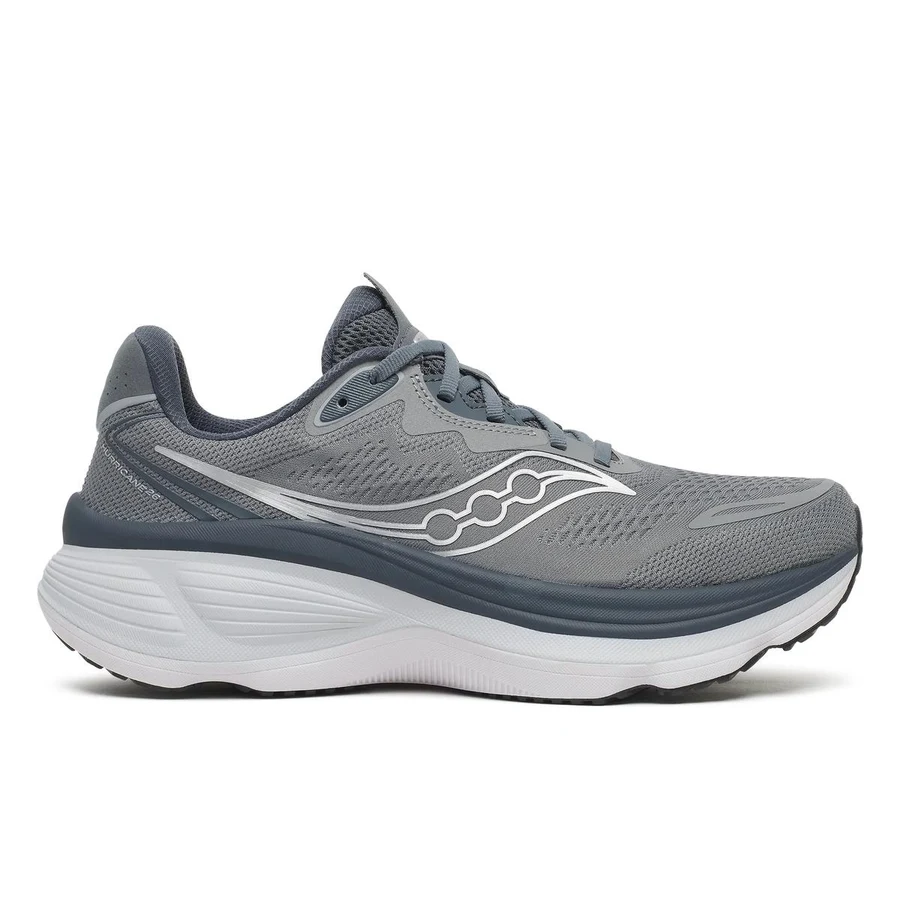
Why we recommend it: The Saucony Hurricane 26 is our maximum-cushion option for runners who want a generous underfoot platform with guidance. Its appeal is the cushioning-and-support combination, rather than a promise that more foam will solve a foot problem.
The important update is incrediLUX cushioning, which replaces the previous Hurricane’s PWRRUN PB-based arrangement. CenterPath remains part of the guidance approach, alongside a supportive frame. That distinction matters when shopping: a listing for the Hurricane 25 is not the same shoe as the Hurricane 26, even if the photographs and model names look similar.
We would put the Hurricane on the shortlist for easy runs, recovery-paced outings and shoppers who specifically enjoy a substantial cushioned trainer. Maximum cushioning is a preference, however, not a requirement attached to flat feet. If you feel more comfortable in the simpler Guide 19, there is no reason to buy the Hurricane purely because it has a more premium foam package.
Use the try-on to check how your foot sits within the platform. The arch should feel supported without being lifted into an uncomfortable position, and your heel should stay secure without overtightening the laces. Buyers who switch between running and walking may appreciate its comfort-focused purpose, but they should still choose it for the activity they do most. For a lighter-feeling training routine or faster sessions, compare a more streamlined pair before committing.
Key specifications
- Support: CenterPath
- Cushioning: incrediLUX with a supportive PWRRUN frame
- Heel-to-toe drop: 6 mm
- Design and use: Maximum-cushion road trainer; XT-900 rubber outsole
What we like
- A specific option for shoppers who prioritize maximum cushioning.
- A newer cushioning package distinguishes it from the Hurricane 25.
- Guidance and a cushioned platform are combined in one trainer.
Potential drawbacks
- The substantial design may be more shoe than some runners want.
- More cushioning does not guarantee a better fit or less discomfort.
Who should buy it: Runners who prefer a generously cushioned, guided shoe for easy road mileage.
Who should consider another option: Buyers who want a streamlined daily shoe or do not enjoy a substantial underfoot platform.
Best Streamlined Stability Running Shoes for Flat Feet: HOKA Arahi 8
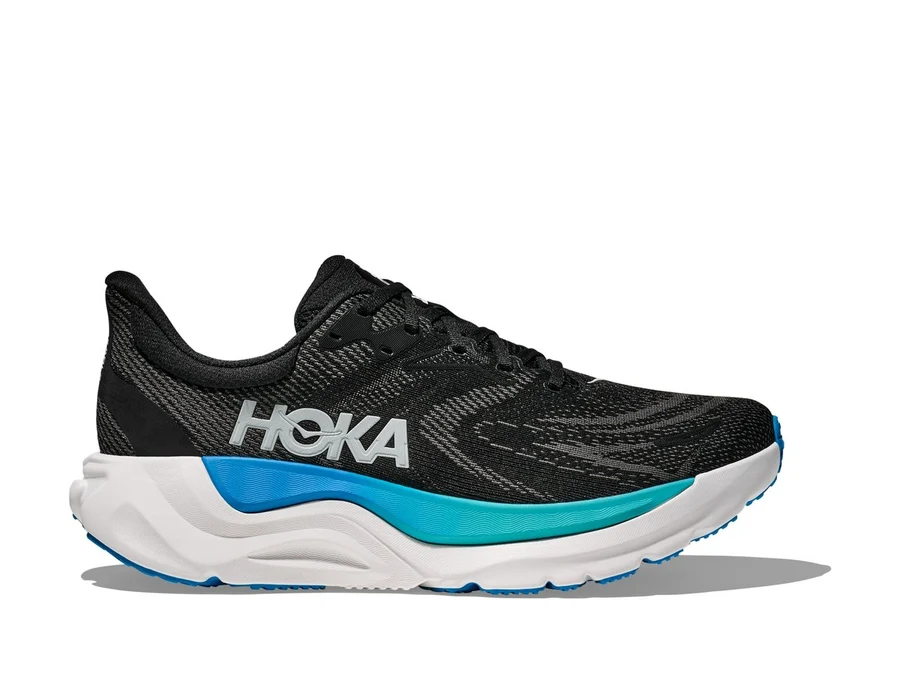
Why we recommend it: The HOKA Arahi 8 is worth comparing if you want HOKA’s stability approach in a more streamlined package. It gives buyers an alternative to selecting the broadest or most cushioned model simply because they have a low arch.
The Arahi 8 uses an enhanced H-Frame, dual-density EVA and a jacquard mesh upper. This is a different support arrangement from the older Arahi models that used HOKA’s J-Frame. If you are buying based on an older review, make sure the description and the model number actually match the eighth version.
We would compare the Arahi with the Gaviota 6 rather than assume that one HOKA stability shoe stands in for the other. The Arahi’s role is the more streamlined choice in this guide; the Gaviota is our broad-platform option. Try both if you enjoy HOKA’s approach but have not decided how much shoe you want around your foot.
During a fit check, pay attention to the transition from walking to a gentle jog. A shoe can feel comfortable while standing and still feel awkward as you move. The inside edge of the midfoot, the heel collar and the space around the little toe deserve separate attention. If you need more width, shop the designated wide version rather than choosing a longer shoe as a workaround. The Arahi belongs on the shortlist for its support-and-size balance, not because HOKA branding alone proves it will suit flat feet.
Key specifications
- Support: Enhanced H-Frame
- Cushioning: Dual-density compression-molded EVA
- Heel-to-toe drop: 8 mm
- Design and use: Everyday road running; double jacquard mesh; abrasion-resistant rubber
What we like
- A streamlined alternative within HOKA’s stability options.
- Enhanced H-Frame provides a clearly defined guidance design.
- An 8 mm drop gives it a different geometry from the Gaviota 6.
Potential drawbacks
- Do not assume the fit or support feels identical to an older Arahi.
- Shoppers wanting a broader platform may prefer the Gaviota.
Who should buy it: Runners who want a streamlined HOKA stability trainer for ordinary road runs.
Who should consider another option: Buyers who prefer a broader platform or feel pressure through the arch during movement.
Best Broad-Platform Running Shoes for Flat Feet: HOKA Gaviota 6
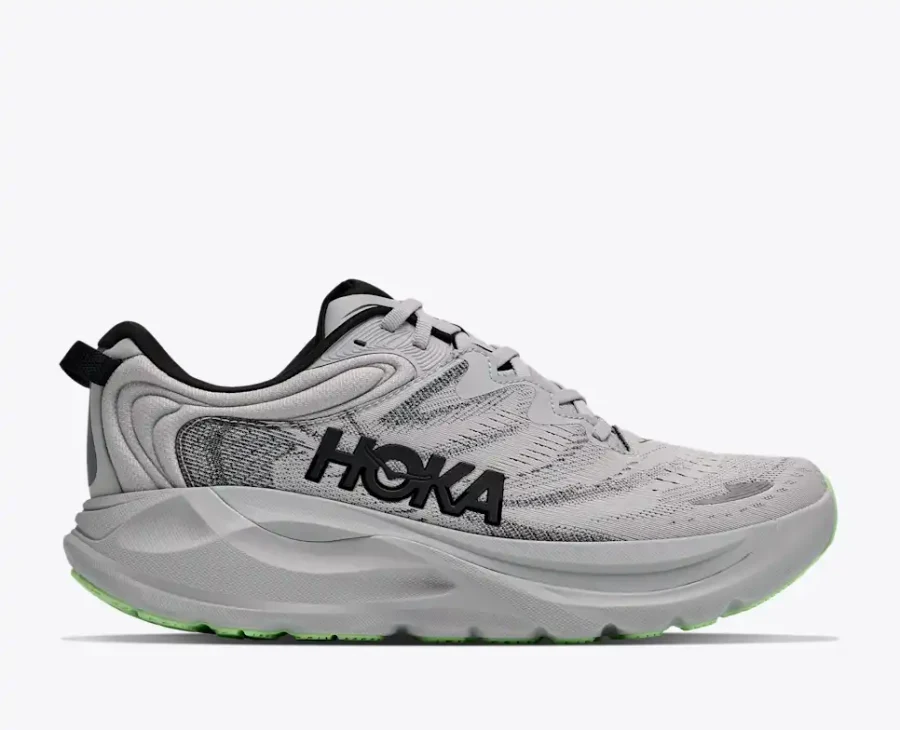
Why we recommend it: The HOKA Gaviota 6 is our broad-platform pick for shoppers who want support from the base of the shoe as well as its guidance system. It is a useful option to compare when a narrow-feeling trainer leaves the midfoot crowded.
HOKA combines its enhanced H-Frame with a wide base, a comfort-focused upper and an internal lacing system. The US product page lists regular, wide and extra-wide choices, although stock depends on size and color. Platform width and upper width are different things, so the broad shape of the sole should not replace checking the actual fit you select.
The buying reason is the overall platform. A runner who likes a roomy, substantial shoe may put the Gaviota ahead of the Arahi even though both use an H-Frame approach. Someone who wants less shoe around the foot may make the opposite decision. This is why we separate the two rather than call either model the automatic best HOKA for flat feet.
Compare the Gaviota with the New Balance 860v15 if width selection is a major concern. The key questions are whether the heel remains secure, whether the toes have room and whether the arch is comfortable under load. If a wide version fixes forefoot pressure but makes the heel loose, it may still be the wrong shape. We would choose the Gaviota for a runner who enjoys its broad platform and fit, not for someone hoping a bigger shoe alone will correct their gait.
Key specifications
- Support: Enhanced H-Frame and a wide base
- Cushioning: Compression-molded foam
- Heel-to-toe drop: 6 mm
- Design and use: Everyday running and walking; mesh upper; internal ghillie lacing
What we like
- Wide-base design gives it a distinct place in the shortlist.
- Regular, wide and extra-wide options are listed in the US range.
- Running-and-walking purpose suits a mixed activity routine.
Potential drawbacks
- Its broad design will not suit shoppers who want a streamlined shoe.
- A wider platform does not guarantee a roomy or secure upper fit.
Who should buy it: Runners who prefer a broad supported platform and want to compare several width options.
Who should consider another option: Buyers who dislike substantial shoes or cannot secure the heel in the chosen width.
Best Wide-Fit Running Shoes for Flat Feet: New Balance Fresh Foam X 860v15
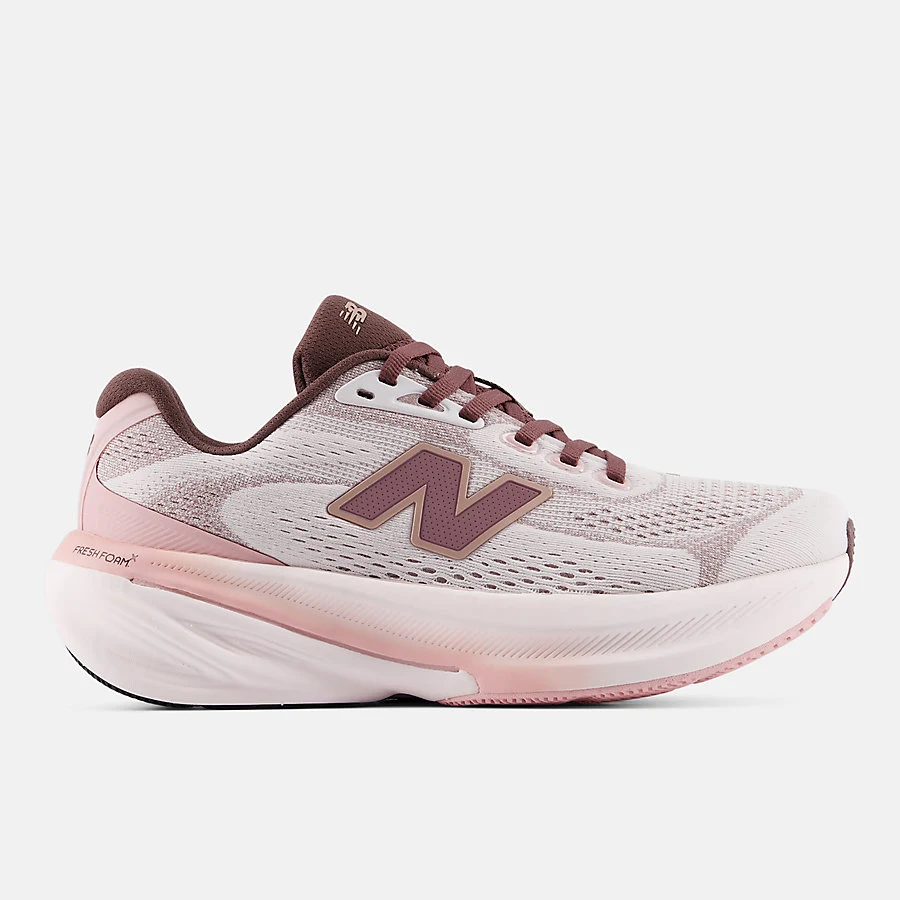
Why we recommend it: The New Balance Fresh Foam X 860v15 is our width-focused shortlist choice because it combines a stability design with several listed fit options. It is especially useful for shoppers who need to solve width and support as separate buying decisions.
The 860v15 pairs Fresh Foam X cushioning with Stability Plane technology and a rocker profile. On the reviewed women’s US page, narrow, standard, wide and extra-wide choices are listed. That does not mean every combination will be available from every Amazon seller, so choose the width from the actual listing rather than relying on the product photograph.
A low arch does not automatically mean a wide foot. The practical advantage here is the ability to compare fit more deliberately. Someone with a wide forefoot may need extra room without a loose heel; someone with a narrower foot may need a more secure upper even though both runners describe their arches as flat. These are different fit problems, and they should not be solved by buying the same generic wide shoe.
The comparison to the Gaviota is useful if a broader upper is your main concern. If your width is ordinary but you want a familiar supported trainer, also compare the Adrenaline. We would not pay extra for a hard-to-find color or size before checking the basic fit. Start with a width and length that work, then assess whether the Stability Plane design feels comfortable at an easy jog. The right width is a buying advantage only when the rest of the shoe suits you.
Key specifications
- Support: Stability Plane
- Cushioning: Fresh Foam X
- Heel-to-toe drop: Not stated on the reviewed US page
- Design and use: Everyday running; rocker profile; lace-adjustable upper
What we like
- Several width choices are listed in the reviewed US range.
- Cushioning and stability are combined in an everyday trainer.
- A helpful option when upper fit matters as much as underfoot support.
Potential drawbacks
- Width availability varies by version, seller, size and color.
- The reviewed page does not provide a drop figure to copy into this guide.
Who should buy it: Runners with flat feet who need a deliberate width choice alongside a supported daily trainer.
Who should consider another option: Shoppers who cannot find the required width or dislike the rocker transition.
Best Plush Running Shoes for Flat Feet: Brooks Glycerin GTS 23
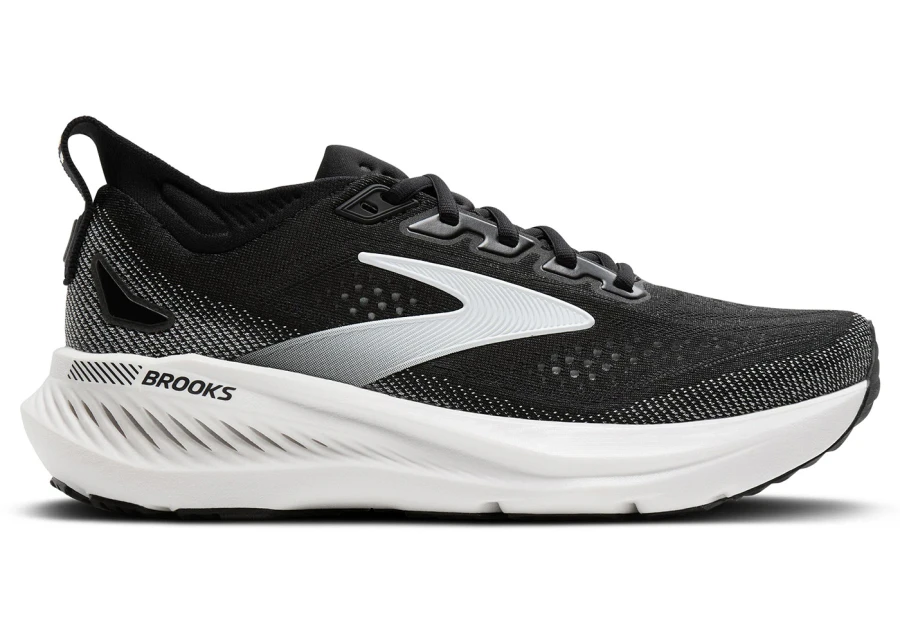
Why we recommend it: The Brooks Glycerin GTS 23 is our plush option for runners who like Brooks support but want a cushioning-focused shoe. It is the model to compare with the Adrenaline when softness is a specific buying priority.
The GTS version adds GuideRails support to the Glycerin range, while DNA Tuned cushioning provides the underfoot package. The 8 mm drop also separates it from the Adrenaline GTS 25. The most important shopping detail is the full model name: the regular Glycerin 23 and Glycerin GTS 23 should not be treated as interchangeable listings.
Choose between the two Brooks models by preference, not by assuming the more expensive one is medically better. If the Adrenaline already feels comfortable and stable to you, its simpler everyday role may be enough. If you specifically want a plush training shoe for easy or longer runs, the Glycerin GTS earns a place in the comparison.
The fit check should include the heel as well as the arch. A soft-feeling shoe is not a good purchase if your heel lifts unless you tighten the laces excessively. Try the Glycerin GTS and Adrenaline in your likely running size, using the same socks, and notice whether the added cushioning is a feature you actually enjoy. We would shortlist the Glycerin GTS for cushioning preference rather than speed work, and we would reject it if its support feels intrusive despite the comfortable first impression.
Key specifications
- Support: GuideRails
- Cushioning: DNA Tuned
- Heel-to-toe drop: 8 mm
- Design and use: Plush road trainer; everyday and long-run use; GTS support version
What we like
- A clearly defined plush option with GuideRails support.
- The GTS model offers a specific alternative to the neutral Glycerin.
- Useful for buyers comparing cushioning within the Brooks range.
Potential drawbacks
- A cushioning-focused trainer may feel substantial to speed-oriented runners.
- The similar names make buying the wrong Glycerin version an easy mistake.
Who should buy it: Runners who prefer a plush Brooks road trainer and specifically want the GTS support version.
Who should consider another option: Buyers who want a lighter workout shoe or find the additional cushioning unnecessary.
Best Running Shoes for Flat Feet for Treadmill Sessions: Nike Structure 26
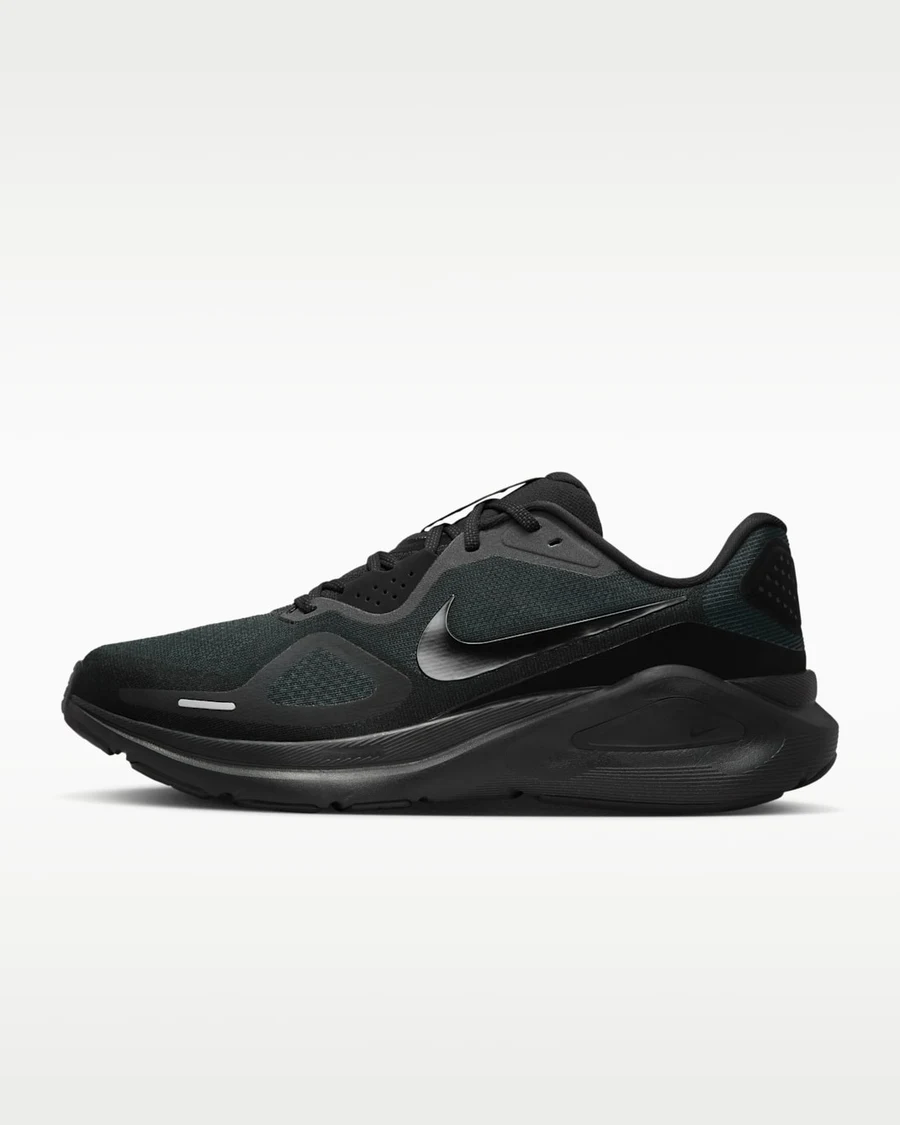
Why we recommend it: The Nike Structure 26 is our treadmill-focused shortlist option for shoppers who want a supported everyday trainer with a secure upper. Its road-running design makes it relevant to steady indoor sessions, although we have not independently tested its treadmill grip.
Nike combines a full-length ReactX midsole with a system that wraps the medial arch and lateral heel. The upper uses engineered mesh with padding around the collar and tongue. For a flat-footed shopper, the most useful question is whether that wrap feels reassuring or presses too firmly through the midfoot.
Compared with the 6 mm Guide and Hurricane, the Structure’s 10 mm drop provides a different buying option. If you already enjoy a higher-drop shoe, it is worth comparing with the Adrenaline. If you prefer a softer, more substantial cushioning package, the Glycerin GTS or Kayano may be better comparison points. We would not choose the Structure just because it matches the rest of a Nike wardrobe.
Nike’s reviewed US page advises ordering a half size up. Treat that as a model-specific starting point, then verify length and width rather than blindly applying it to every running shoe. On a treadmill try-on, keep the pace easy and pay attention to heel security and midfoot pressure. You still need enough toe room when moving, even if an indoor session feels less demanding than a long outdoor run. This is a supported daily trainer, not a specialist shoe for lateral gym movements or heavy lifting.
Key specifications
- Support: Midfoot support system
- Cushioning: Full-length ReactX
- Heel-to-toe drop: 10 mm
- Design and use: Road trainer; engineered mesh; cushioned collar and tongue
What we like
- Midfoot and heel support are clearly described in the design.
- A higher-drop alternative to several lower-drop models.
- An adjustable, cushioned upper offers useful fit checkpoints.
Potential drawbacks
- The arch wrap may feel too pronounced for some runners.
- The model-specific sizing advice deserves attention before ordering.
Who should buy it: Runners who want a supportive Nike daily trainer for steady road or treadmill mileage.
Who should consider another option: Shoppers who dislike midfoot pressure or need a shoe primarily for lifting and lateral gym workouts.
Running-Shoe Comparison
| Product | Support design | Drop | Main buying reason |
|---|---|---|---|
| Brooks Adrenaline GTS 25 | GuideRails | 10 mm | Best Overall |
| ASICS GEL-KAYANO 32 | 4D GUIDANCE SYSTEM | Not listed here; verify selected US listing | Best for Long Runs |
| ASICS GT-2000 14 | 3D GUIDANCE SYSTEM | Not listed here; verify selected US listing | Best Versatile |
| Saucony Guide 19 | CenterPath | 6 mm | Best Daily Training |
| Saucony Hurricane 26 | CenterPath | 6 mm | Best Maximum-Cushion |
| HOKA Arahi 8 | Enhanced H-Frame | 8 mm | Best Streamlined Stability |
| HOKA Gaviota 6 | Enhanced H-Frame and a wide base | 6 mm | Best Broad-Platform |
| New Balance Fresh Foam X 860v15 | Stability Plane | Not stated on the reviewed US page | Best Wide-Fit |
| Brooks Glycerin GTS 23 | GuideRails | 8 mm | Best Plush |
| Nike Structure 26 | Midfoot support system | 10 mm | Best for Treadmill Sessions |
Drop figures above are published specifications rather than our own measurements. We have left a figure unlisted when the reviewed US page did not clearly provide it. Prices, available widths and color choices can differ between men’s and women’s versions and between sellers.
How to Choose Running Shoes for Flat Feet
Start with comfortable support, not the strongest support
A low arch describes the shape of your foot; pronation describes movement. They are related shopping considerations, but they are not the same thing. Do not assume that the most controlling stability shoe is necessary just because your footprint looks flat. Start by considering what has felt comfortable in the shoes you already use, and whether you have been advised to use a particular type of support.
If you know you prefer guidance, compare two different systems rather than two colorways of the same shoe. The Brooks Adrenaline GTS 25 and Saucony Guide 19 provide useful starting points because their support arrangements and drops differ. Try both at an easy pace and pay attention to how the arch feels when the foot is loaded.
Treat width and arch height as separate fit decisions
The New Balance Fresh Foam X 860v15 and HOKA Gaviota 6 are good shortlist options when you want to compare listed widths. Choose the appropriate men’s or women’s version first, then the actual width. A wide sole in a photograph does not prove that the upper will have enough room for your foot.
Do not fix a tight forefoot by repeatedly moving up in length. A shoe that is too long can leave the heel loose while the midfoot still feels crowded. Check both feet, use your running socks and make sure your toes have room without sliding around. A retailer’s fit assessment can help when you are unsure whether length, width or the shape of the shoe is the problem.
Choose cushioning for your training routine
A runner doing ordinary daily mileage may prefer the Saucony Guide 19 or ASICS GT-2000 14. A runner who specifically enjoys a substantial cushioned platform may put the Saucony Hurricane 26 or ASICS GEL-KAYANO 32 higher on the shortlist. These are different preferences, not a progression from medically worse to medically better shoes.
Think about the runs you actually do. If most are short and steady, a versatile daily trainer may be enough. If you already know you like a plush shoe for longer easy runs, that feature can justify spending more. Avoid paying for a maximum-cushion design merely because it sounds more protective; comfortable fit still comes first.
Check the complete model name before buying
The Brooks Glycerin GTS 23 includes GTS support, while the regular Glycerin is a different support category. The Saucony Hurricane 26 has a different cushioning package from the Hurricane 25. These details are easy to miss when marketplace listings group several models or older versions together.
Read the selected option, seller information and return conditions before ordering. The Amazon buttons in this guide open searches for the named model rather than a single guaranteed listing. Check that the pair you select matches the version discussed here, including whether it is men’s or women’s and whether the width is standard, wide or extra-wide.
Try prescribed inserts with the shoe
If you already use an orthotic prescribed for you, evaluate the shoe with that insert rather than judging the fit using only the stock sockliner. The insert can change the available space and how securely the heel sits. Follow the fitting advice you were given instead of automatically stacking an extra insert on top of the existing one.
Do not buy a stability shoe as a replacement for assessing persistent pain. New arch collapse, swelling, increasing pain or difficulty with ordinary walking deserves professional attention. This buying guide compares footwear; it cannot determine the cause of symptoms or prescribe treatment.
Best Running Shoes for Flat Feet for Men and Women
The best running shoes for flat feet for men and the best running shoes for flat feet for women are not necessarily different model families. The useful differences are the available last, size range, widths and how securely the shoe holds your foot. Pick labels such as overall, plush or wide fit describe the buying role, not a universal winner for a gender.
For a supported everyday shoe, both men’s and women’s shoppers can begin by comparing the Brooks Adrenaline GTS 25 with another suitable fit. If width is the priority, examine the options for the New Balance Fresh Foam X 860v15 in your chosen version. Do not assume that the width letter or sizing advice transfers unchanged between men’s and women’s listings.
New to running as well as shopping for low-arch support? Our best running shoes for beginners guide explains the first-pair buying decision across a broader mix of neutral and supported trainers. Use this shortlist when guidance is a specific preference rather than treating it as mandatory for every beginner with flat feet.
How We Selected These Running Shoes
Tea Buster compared published product specifications, support systems, fit options and intended training uses. We selected ten distinct buying roles rather than giving every shoe the same cushioning-based recommendation. These are research-based selections; we have not independently wear-tested these pairs.
Our priorities were clearly described support, practical everyday running use, meaningful alternatives in fit or cushioning, and model-specific information that helps a shopper compare pairs. We did not assign numerical performance scores, claim a podiatrist endorsement for our list or rank shoes by an unverified Amazon discount. The picks should help you form a shortlist; your fit check determines the purchase.
Frequently Asked Questions
What are the best running shoes for flat feet?
Our overall starting point is the Brooks Adrenaline GTS 25 for shoppers who want a supportive everyday trainer. The New Balance Fresh Foam X 860v15 is worth comparing when width matters, and the ASICS GEL-KAYANO 32 suits a cushioning-focused shortlist. There is no single shoe that is best for every low arch; reject any pair that creates uncomfortable pressure or fails to hold your heel securely.
Do runners with flat feet always need stability shoes?
No. Arch height alone does not establish which shoe category you need. Some runners prefer neutral footwear, while others find a guided model more comfortable. If you already know that added support works for you, the Saucony Guide 19 and Brooks Adrenaline GTS 25 are sensible models to compare. Pain or a changing arch requires a separate assessment rather than a stronger shoe chosen from a list.
Which running shoes should I compare for flat, wide feet?
Start by checking the available widths of the New Balance Fresh Foam X 860v15 and HOKA Gaviota 6. Their width options make them useful comparisons, but inventory depends on the selected version and seller. A broad platform is not the same as a wide upper, so check forefoot room and heel security separately. Do not assume all flat feet need a wide shoe.
Are HOKA running shoes a good option for flat feet?
The HOKA Arahi 8 and HOKA Gaviota 6 are relevant options for runners who want HOKA’s H-Frame guidance. We would compare the Arahi for a more streamlined daily trainer and the Gaviota for a broad-platform option. Neither is automatically right because it is a HOKA: comfort through the arch, the appropriate width and a secure heel remain the deciding checks.
Which Brooks shoe should I choose for flat feet?
Compare the Brooks Adrenaline GTS 25 if you want balanced everyday cushioning and the Brooks Glycerin GTS 23 if you specifically prefer a plush trainer. Both include GuideRails, but their cushioning roles and drops differ. Make sure the Glycerin listing includes GTS if that is the version you intend to buy; the regular Glycerin is not an identical support option.
Is the Kayano better than the GT-2000 for flat feet?
The ASICS GEL-KAYANO 32 is our more cushioned long-run comparison, while the ASICS GT-2000 14 is our versatile daily-training pick. Better depends on the fit and the amount of shoe you enjoy. Choose the Kayano for its cushioning-focused role if that is your preference; choose the GT-2000 if its more streamlined training brief and fit work better for you.
Can I use these shoes for treadmill running?
These are road-running trainers, and several can be considered for ordinary treadmill sessions. The Nike Structure 26 is our supported treadmill-focused shortlist option, while the ASICS GT-2000 14 offers another everyday comparison. We have not performed independent treadmill grip tests. Choose the pair that fits securely and feels comfortable at the pace you usually run, rather than buying from the treadmill label alone.
Will running shoes fix flat feet or cure foot pain?
No shoe in this guide is offered as a cure. A comfortable pair such as the Brooks Adrenaline GTS 25 may suit your footwear preferences, but selecting a stability shoe does not diagnose or treat the cause of pain. Seek appropriate professional advice if pain persists, your arch changes or swelling develops. If an orthotic is recommended for you, fit the shoe with that insert.
Which Pair Should You Buy?
Start with your biggest buying problem. For an everyday supported trainer, compare the Brooks Adrenaline GTS 25 and Saucony Guide 19. For width selection, look closely at the New Balance Fresh Foam X 860v15 and HOKA Gaviota 6. For cushioning-focused easy miles, compare the ASICS GEL-KAYANO 32, Saucony Hurricane 26 and Brooks Glycerin GTS 23.
Then let fit narrow the list. The best purchase is the pair that provides comfortable support, adequate toe room and a secure heel for your running routine. A model that looks excellent on paper should still be ruled out if it presses into your arch or feels awkward when you move.