Starting running is easier when your shoes feel comfortable from the first step. The best running shoes for beginners give you a secure fit, enough room at the toes and a design suited to your everyday route. Whether you are building a run-walk routine, using a treadmill or preparing for your first 5K, a good daily trainer is a practical place to start.
We compare ten options below, from the straightforward Brooks Ghost 18 to cushioning-focused and guided alternatives. Each pick includes key details, strengths, trade-offs and who it suits, so you can choose around your needs and budget.
Our Top Picks
Best Overall Running Shoes for Beginners: Brooks Ghost 18
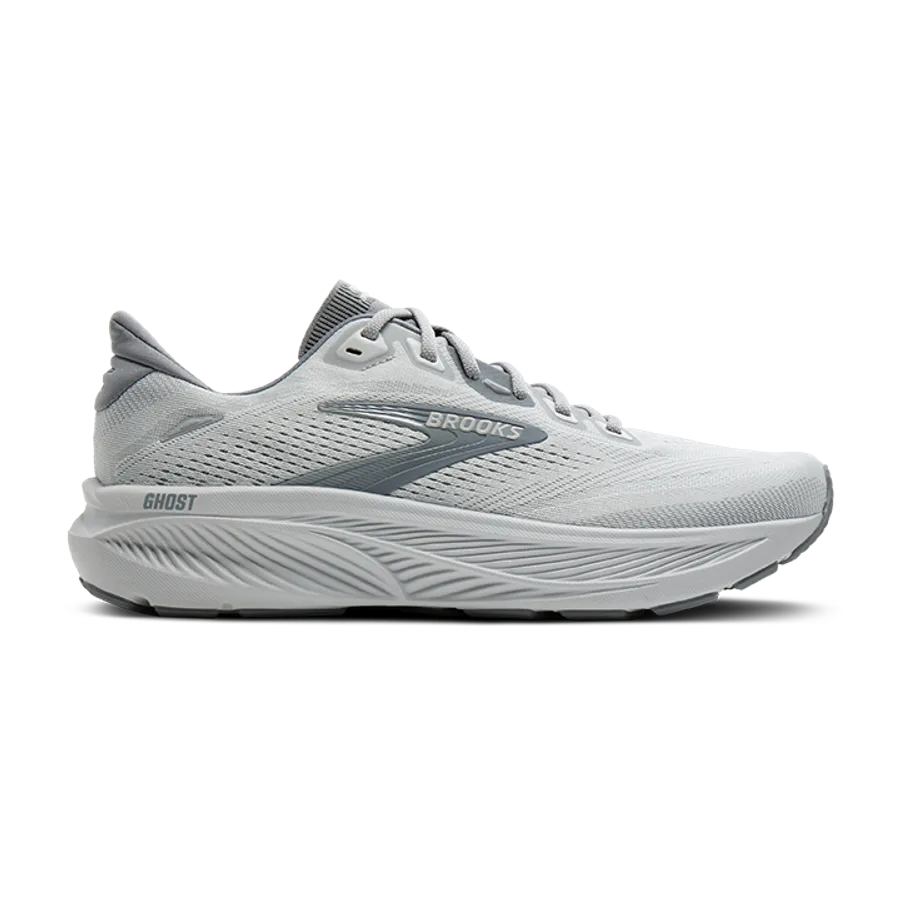
Why we recommend it: The Brooks Ghost 18 is a sensible first pair when your plan combines easy jogging, walking breaks and regular road miles. Its balanced cushioning and conventional daily-training design put comfort and repeat use ahead of race-day features. Brooks also offers several widths, which makes it easier to compare fit without simply buying a longer shoe.
The Ghost makes the most sense for a runner building consistency. You can use it as the everyday reference when comparing other models: check how securely the heel sits, whether your toes can spread, and whether the upper feels comfortable when walking and jogging. Those are the details that matter during a beginner’s ordinary session. A shoe that feels unremarkable in the shop can be a useful purchase if it lets you get on with the run.
Choose the Ghost over the HOKA Bondi 9 if you prefer a more conventional trainer rather than a cushioning-first platform. Compare it with the Nike Pegasus 42 if price is the deciding factor. The width options are a stronger reason to consider it than the popularity of the brand.
Key specifications
- Type: everyday road trainer
- Drop: 10 mm
- Cushioning: DNA LOFT v3
- Fit: multiple widths, depending on version and availability
What we like
- A clear everyday-running role that also suits walking.
- Multiple width choices help separate width problems from length.
- A practical alternative to buying a specialist racing shoe as your first pair.
Potential drawbacks
- Not the most focused choice for a runner seeking a fast-workout shoe.
- The exact width and color combination you want may be unavailable.
Who should buy it: New runners who want a straightforward daily trainer for road running and run-walk sessions.
Who should consider another option: Runners who know they prefer a lower-drop platform, maximum cushioning or deliberate stability guidance.
Best Versatile Running Shoes for Beginners: ASICS Novablast 6
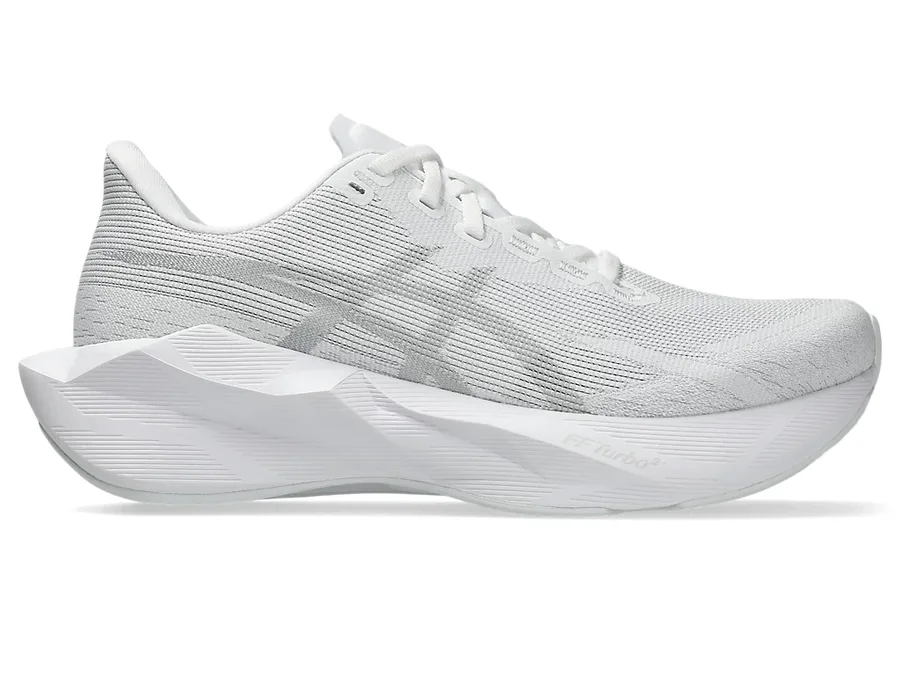
Why we recommend it: The ASICS Novablast 6 is worth considering when you want an everyday shoe with a more energetic design. Its FF BLAST MAX cushioning works with an FF TURBO SQUARED forefoot pod, giving this model a different proposition from a traditional trainer. It is a useful option for a beginner who enjoys a responsive-feeling platform and expects to keep the same pair as training develops.
Versatility matters because your early routine will probably change. You might begin with short running intervals and later run continuously or add a quicker finish. A daily trainer can cover that progression without becoming a dedicated race shoe. The Novablast’s appeal is the range of sessions it can be considered for, rather than a claim that more advanced foam makes a new runner progress faster.
Try it beside the Brooks Ghost 18 to decide whether you prefer an energy-focused design or a simpler everyday reference. The Saucony Hurricane 25 is a different comparison if you already prefer guidance. Foam technology should help explain a shoe’s character; the fit still decides whether it belongs on your feet.
Key specifications
- Type: versatile road daily trainer
- Cushioning: FF BLAST MAX
- Forefoot: FF TURBO SQUARED pod
- Best use: easy running and a developing training routine
What we like
- A daily-training role that leaves room for a changing routine.
- A distinctive cushioning construction for runners who like an energetic design.
- A more relevant first-pair comparison than a dedicated carbon racer.
Potential drawbacks
- Its character may be less appealing to someone who wants a quieter, conventional feel.
- A neutral model is not a substitute for checking a specific support preference.
Who should buy it: Beginners who want a versatile road shoe and enjoy a more responsive design.
Who should consider another option: Shoppers who dislike the feel during a fitting or specifically prefer a guided trainer.
Best Value Running Shoes for Beginners: Nike Pegasus 42
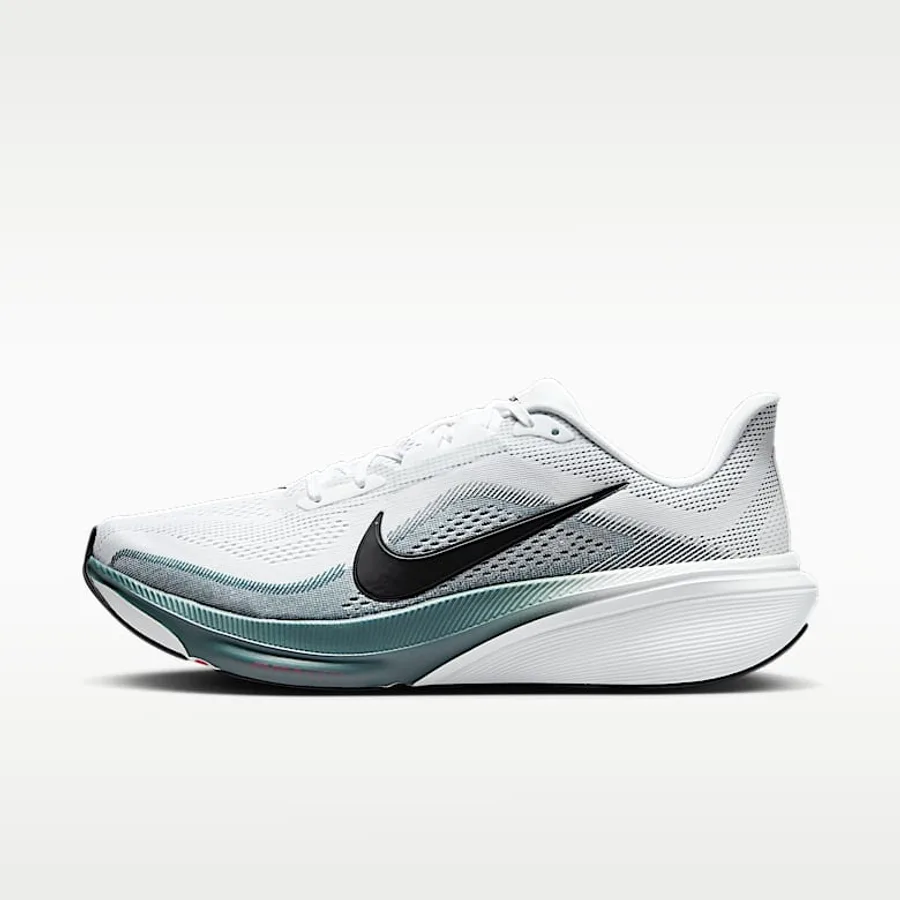
Why we recommend it: The Nike Pegasus 42 is our value-focused choice for beginners comparing the complete cost of a daily road shoe. ReactX cushioning and a curved, full-length Air Zoom unit give it a clear everyday-training purpose. Its value depends on the price of your exact size and the fit, rather than a discount percentage attached to the model name.
For a first purchase, versatility can be more useful than specialisation. A pair used comfortably throughout your normal week offers more practical value than a premium racer kept for an event you have not entered. Compare the Pegasus in the socks you use for running, and check that the chosen width and heel fit suit you before considering the color or sale badge.
Compare the Pegasus with the Brooks Ghost 18 and Saucony Ride 19 at their actual checkout prices. Include delivery and return conditions. The least expensive listing is not necessarily the strongest purchase if it sells a different generation, changes the width selection or makes returns difficult.
Key specifications
- Type: everyday road trainer
- Drop: 10 mm
- Midsole: ReactX foam
- Air unit: curved, full-length Air Zoom
What we like
- An everyday-road use case that is easy for a beginner to understand.
- A cushioning and air-unit combination designed for regular training.
- A useful model to compare when you want one practical pair.
Potential drawbacks
- It may not be the cheapest option in your selected size.
- Someone prioritizing maximum cushioning or specific guidance has more focused alternatives.
Who should buy it: New runners comparing price, fit and everyday usefulness.
Who should consider another option: Anyone whose selected listing has unclear sizing, seller information or return terms.
Best Cushioned Running Shoes for Beginners: HOKA Bondi 9
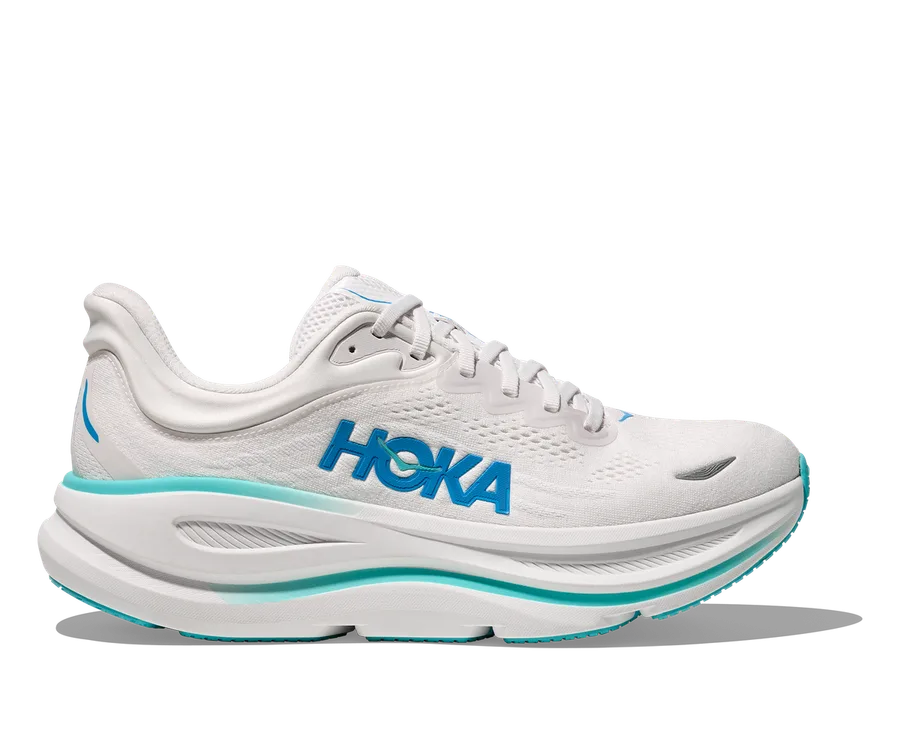
Why we recommend it: The HOKA Bondi 9 is the option to compare if a generous cushioning platform is high on your wish list. HOKA positions it around plush everyday mileage, and its 5 mm drop sets it apart from the Ghost and Pegasus. This award is about a cushioning preference, not a requirement that every beginner buy the softest or most substantial shoe.
A run-walk routine can involve plenty of time on your feet, so the overall feel matters even when you are not running continuously. Stand, walk and jog in the Bondi during a fitting. Check the heel, upper and toe space as carefully as the cushioning. A comfortable sensation underfoot is helpful, but it should not distract you from pressure at the forefoot or a loose heel.
Compare it with the ASICS Gel-Nimbus 28 for another comfort-oriented option. If the substantial platform feels like more shoe than you want, return to the Brooks Ghost 18 or Saucony Ride 19. Choosing between these models is primarily a matter of fit and preferred ride.
Key specifications
- Type: cushioning-focused everyday shoe
- Support category: neutral
- Drop: 5 mm
- Best use: easy sessions and a cushioning-first preference
What we like
- A clear cushioning-first alternative within a beginner shortlist.
- An everyday-mileage purpose rather than a racing focus.
- A different drop and platform to compare against conventional trainers.
Potential drawbacks
- A substantial shoe may feel excessive if you prefer a lighter-feeling trainer.
- The lower drop differs from several other picks; do not assume the models feel interchangeable.
Who should buy it: Beginners who prefer generous cushioning for relaxed sessions.
Who should consider another option: Runners who feel awkward in a substantial platform or mainly want a lightweight workout shoe.
Best Stability Running Shoes for Beginners: Saucony Hurricane 25
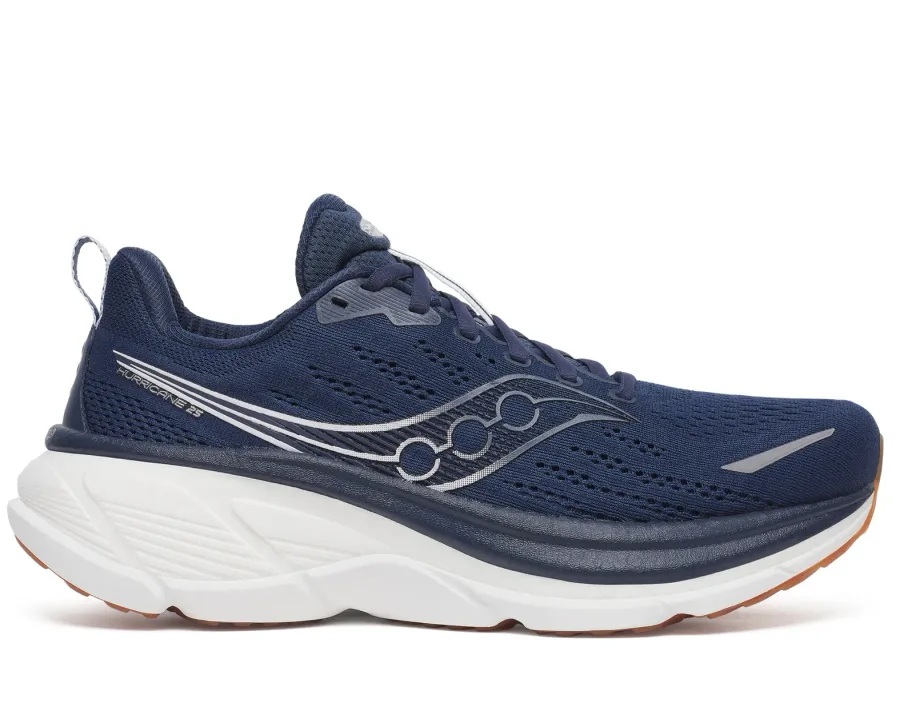
Why we recommend it: The Saucony Hurricane 25 combines cushioning with a more guided platform. Its PWRRUN PB layer sits within a PWRRUN frame, and CenterPath geometry is part of the support approach. It belongs in this guide for a beginner who already prefers guidance or wants to compare supported footwear during a fitting.
Stability is a category, not a quality score. A neutral shoe can be a good first purchase, and extra structure is not automatically better because you are new to running. Compare how the Hurricane holds your foot and how naturally you move in it. The useful question is whether the full design suits you, rather than whether one branded technology sounds reassuring.
The HOKA Bondi 9 provides a cushioning-first neutral comparison, while the Brooks Ghost 18 is a more conventional everyday option. Choose the Hurricane when the guidance is part of what you want from the shoe. If a neutral model fits comfortably and feels suitable, you do not need to upgrade categories simply for the label.
Key specifications
- Type: guided daily trainer
- Drop: 6 mm
- Cushioning: PWRRUN PB with a PWRRUN frame
- Guidance: CenterPath geometry
What we like
- A defined cushioning-plus-guidance option.
- CenterPath and the foam frame provide a different construction from the neutral picks.
- A daily-training purpose that makes more sense than a race-only shoe for regular use.
Potential drawbacks
- The structured design may feel unnecessary to runners who prefer neutral shoes.
- The Hurricane 25 and later generations may use different materials; check the exact version.
Who should buy it: Beginners who prefer a cushioned daily trainer with guidance.
Who should consider another option: Anyone choosing footwear to diagnose or treat pain without an appropriate assessment.
Best Everyday Running Shoes for Beginners: Saucony Ride 19
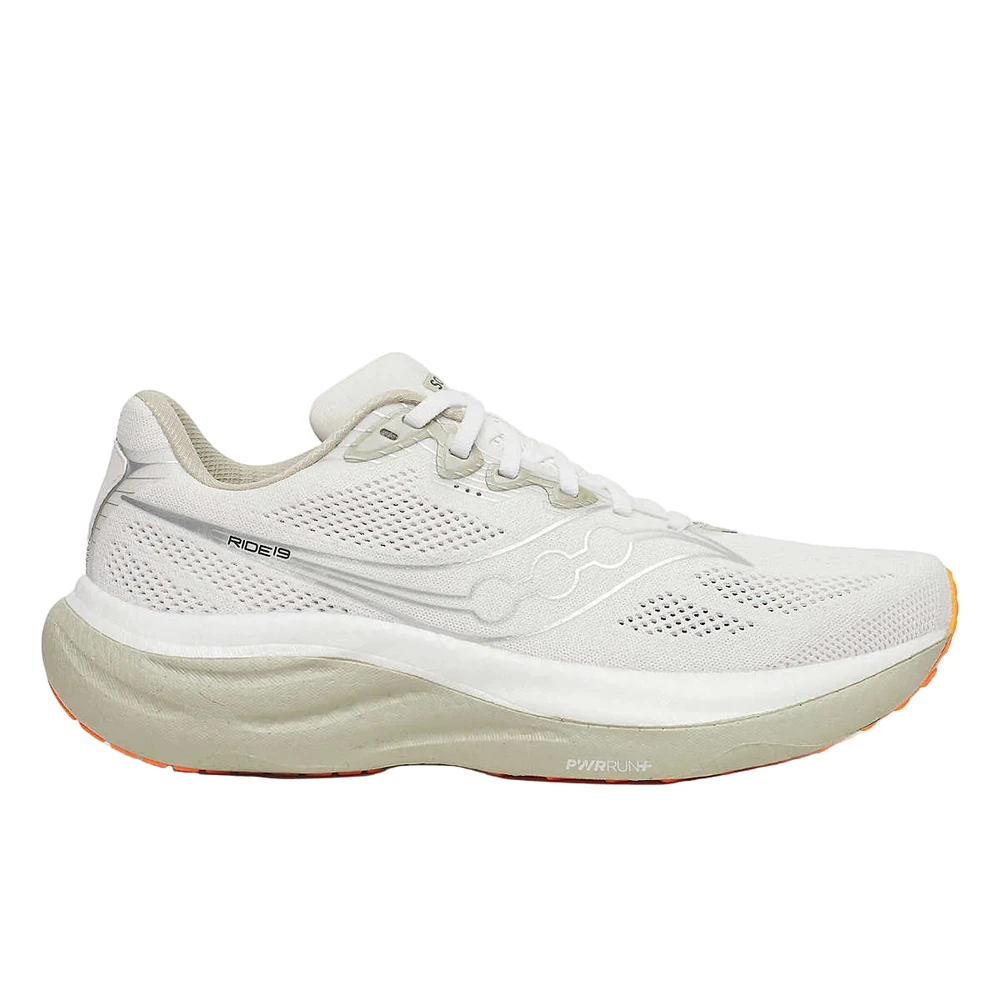
Why we recommend it: The Saucony Ride 19 is a strong everyday comparison for a beginner who wants a conventional training shoe. Its PWRRUN+ cushioning and 8 mm offset place the buying emphasis on regular road use. This is the model to inspect when you want a daily trainer without making a plated workout shoe your default.
A simple first-shoe decision can be more productive than comparing every foam in the market. Put the Ride beside the Ghost and Pegasus, check the fit, and walk or jog in each under the same conditions. Keep the socks, lacing and selected size consistent enough to make the differences understandable. The pair that feels comfortable without a pressure point deserves more attention than the one with the longest feature list.
Compare the Ride with the Nike Pegasus 42 if both are available near your budget. The listed drops differ, and the cushioning systems are different, but those numbers cannot decide your preference on their own. If you later add dedicated faster sessions, the Saucony Endorphin Speed 5 becomes a separate comparison rather than a necessary replacement.
Key specifications
- Type: neutral everyday trainer
- Drop: 8 mm
- Cushioning: PWRRUN+
- Best use: a regular road-running routine
What we like
- A clearly defined everyday-training purpose.
- An 8 mm drop provides another option beside the 5, 6 and 10 mm picks.
- Useful for comparing fit without immediately moving to a racing category.
Potential drawbacks
- It is not the most specialized choice for maximum cushioning or deliberate guidance.
- Availability, width and price need checking for the exact men’s or women’s version.
Who should buy it: Beginners looking for one neutral trainer for their normal road sessions.
Who should consider another option: Runners whose main requirement is a guided platform or a dedicated faster-session shoe.
Best Comfort-Focused Running Shoes for Beginners: New Balance 1080 v15
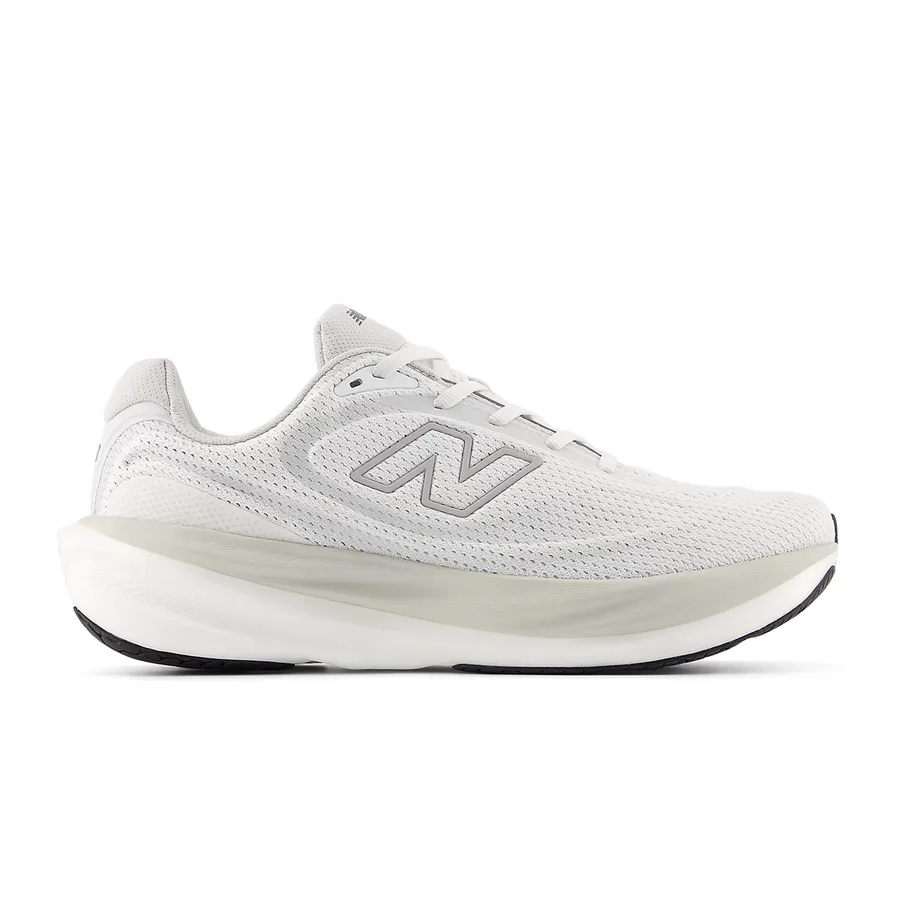
Why we recommend it: The New Balance 1080 v15 is worth comparing when comfort and fit options take priority in your first pair. New Balance uses Infinion cushioning in this generation and lists a 6 mm drop. Its everyday-running position makes it relevant to a beginner building a routine, rather than someone shopping only for a race.
Pay attention to the version number. The 1080 v15 uses a different cushioning name from older models, so a listing that combines several generations can be confusing. Confirm the selected product before comparing specifications or prices. Fit should also be checked in the actual width you intend to order, rather than relying on a standard-width trial and hoping another size will behave the same way.
The HOKA Bondi 9 and ASICS Gel-Nimbus 28 are useful comfort-oriented alternatives. Compare the uppers as well as the cushioning: a soft platform cannot compensate for forefoot pressure or heel movement. If a width issue is driving the purchase, the Brooks Ghost 18 also deserves a place in the fitting.
Key specifications
- Type: everyday and long-run trainer
- Drop: 6 mm
- Cushioning: Infinion foam
- Fit: selected versions offered in multiple widths
What we like
- A comfort-oriented everyday-running role.
- A current-generation cushioning construction that is easy to distinguish from older 1080 versions.
- Width choices in selected variants can improve the fitting comparison.
Potential drawbacks
- A comfortable daily shoe is not automatically the best choice for fast workouts.
- Some colors and widths may be available only in selected versions or sizes.
Who should buy it: Beginners prioritizing comfort and an appropriate width for everyday mileage.
Who should consider another option: Shoppers who cannot confirm the generation or selected width in the listing.
Best Running Shoes for Beginner Long Runs: ASICS Gel-Nimbus 28
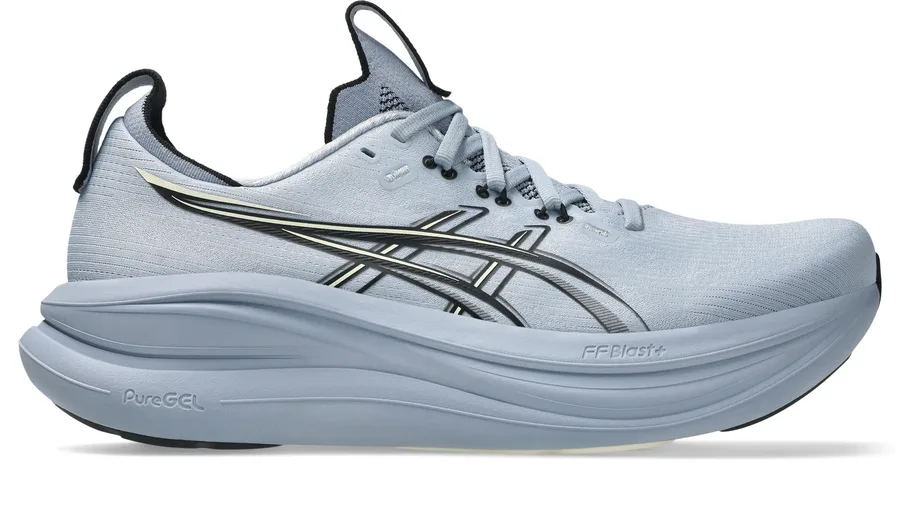
Why we recommend it: The ASICS Gel-Nimbus 28 is a comfort-focused option for beginners whose runs are gradually getting longer. ASICS combines FF BLAST PLUS cushioning with PureGEL technology. The reason to consider it is the everyday comfort proposition, rather than an expectation that the shoe will turn an easy session into a fast workout.
As your sessions extend, small fitting problems become more noticeable. Check whether the upper feels secure without squeezing, whether your toes have room and whether the heel remains settled. A short try-on cannot reproduce every long run, but it can identify an obvious pressure point before you commit. Choose a seller whose return conditions you understand and keep the first trial within those rules.
Try the Nimbus beside the New Balance 1080 v15 or HOKA Bondi 9 if your main preference is comfort. The ASICS Novablast 6 is a different comparison if an energy-focused training design appeals more. These alternatives can help you identify whether cushioning, upper fit or overall character is the deciding factor.
Key specifications
- Type: comfort-oriented road trainer
- Cushioning: FF BLAST PLUS
- Additional technology: PureGEL
- Best use: relaxed running and increasing time on feet
What we like
- A clear comfort-oriented road-running position.
- FF BLAST PLUS and PureGEL distinguish its construction.
- A useful comparison as easy sessions involve more time on feet.
Potential drawbacks
- It is less focused on faster workouts than the tempo-oriented option in this guide.
- A comfortable reputation does not settle whether its particular upper fits you.
Who should buy it: Beginners increasing their relaxed running time and prioritizing comfort.
Who should consider another option: Runners mainly shopping for a lightweight fast-session shoe.
Best Lightweight Running Shoes for Beginners: Adidas Adizero EVO SL
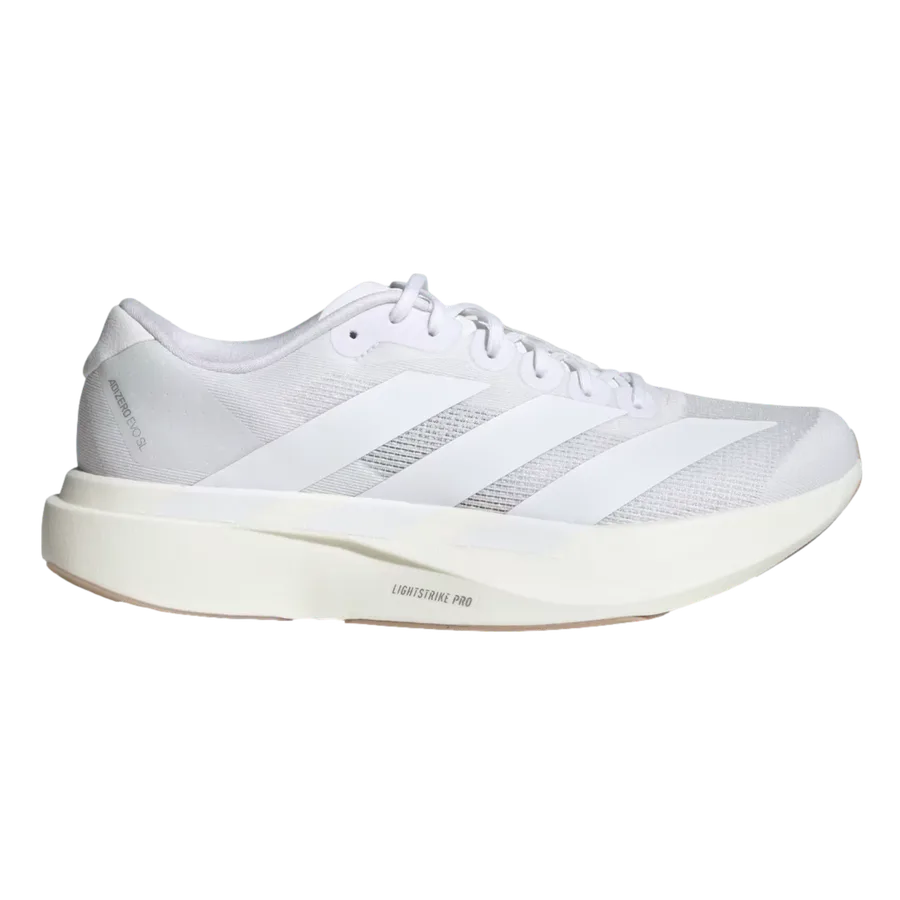
Why we recommend it: The Adidas Adizero EVO SL is the alternative for a beginner who dislikes a substantial daily trainer and prefers a more streamlined design. Adidas uses Lightstrike Pro cushioning and lists a 6 mm drop. Its performance-oriented character makes it an interesting comparison, but it should earn its place through fit rather than a connection to record-setting racing shoes.
A light-feeling shoe can be appealing during a fitting, yet the upper still needs to hold your foot securely. Check the tongue, heel and lacing carefully. Do not assume that less bulk means better comfort or that a shoe’s racing-family name makes it the right purchase. Beginners can choose performance-oriented footwear, provided the actual model matches their ordinary running and feels comfortable.
Try it against the ASICS Novablast 6 if you want an energetic daily-training option. Compare it with the Brooks Ghost 18 if you are deciding between streamlined and conventional constructions. The Ghost may make more sense when width choice and a straightforward everyday role matter most.
Key specifications
- Type: versatile performance-oriented road trainer
- Drop: 6 mm
- Cushioning: Lightstrike Pro
- Best use: runners who prefer a streamlined design
What we like
- A streamlined alternative to cushioning-first platforms.
- Lightstrike Pro cushioning within a versatile road-shoe design.
- A useful comparison for a beginner with a clear lightweight preference.
Potential drawbacks
- Its fit and lacing deserve careful checking.
- A beginner seeking a substantial upper or guidance may prefer another model.
Who should buy it: New runners who prefer a streamlined road trainer and can confirm a secure fit.
Who should consider another option: Anyone buying it for racing-family prestige while overlooking comfort.
Best Running Shoes for Beginners Adding Workouts: Saucony Endorphin Speed 5
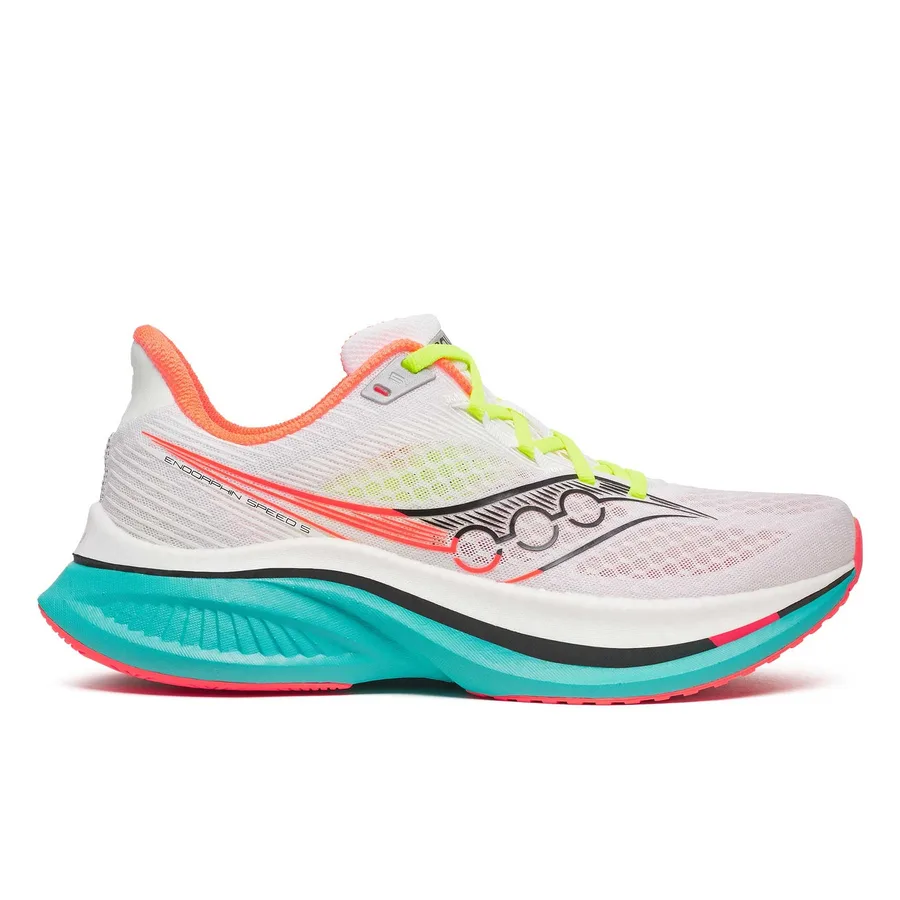
Why we recommend it: The Saucony Endorphin Speed 5 is our specialist option for a beginner who has established an easy-running routine and is adding controlled faster sessions. Saucony combines PWRRUN PB cushioning with a semi-rigid nylon plate. Its purpose is different from the Ghost or Ride: it makes more sense as a workout comparison than a default first pair for every new runner.
Most beginners can build a routine with one suitable daily trainer. Consider a second shoe only when your actual training gives it a job. If all your sessions are short and easy, the Speed’s additional specialization may not be the best use of your budget. If you are following a plan that includes controlled quicker running, compare the model during a fitting and understand the retailer’s trial conditions.
The Saucony Ride 19 is the simpler everyday option; the ASICS Novablast 6 and Adidas Adizero EVO SL are relevant versatile alternatives. The right choice depends on whether you need a dedicated workout shoe or want one pair to cover the ordinary week.
Key specifications
- Type: faster-session road trainer
- Cushioning: PWRRUN PB
- Plate: semi-rigid nylon
- Best use: runners progressing to structured faster sessions
What we like
- A defined purpose for a runner beginning structured workouts.
- A nylon plate rather than a carbon race-shoe recommendation.
- Adds a clearly different use case to the everyday picks.
Potential drawbacks
- More specialized than many beginners need for their first purchase.
- Its workout focus can be poor value if your routine stays entirely easy.
Who should buy it: Beginners who already run consistently and are adding planned faster sessions.
Who should consider another option: First-time shoppers whose main need is a comfortable everyday run-walk shoe.
Beginner Running-Shoe Comparison
| Shoe | Main use | Key construction |
|---|---|---|
| Brooks Ghost 18 | everyday road trainer | Cushioning: DNA LOFT v3 |
| ASICS Novablast 6 | versatile road daily trainer | Forefoot: FF TURBO SQUARED pod |
| Nike Pegasus 42 | everyday road trainer | Midsole: ReactX foam |
| HOKA Bondi 9 | cushioning-focused everyday shoe | Drop: 5 mm |
| Saucony Hurricane 25 | guided daily trainer | Cushioning: PWRRUN PB with a PWRRUN frame |
| Saucony Ride 19 | neutral everyday trainer | Cushioning: PWRRUN+ |
| New Balance 1080 v15 | everyday and long-run trainer | Cushioning: Infinion foam |
| ASICS Gel-Nimbus 28 | comfort-oriented road trainer | Additional technology: PureGEL |
| Adidas Adizero EVO SL | versatile performance-oriented road trainer | Cushioning: Lightstrike Pro |
| Saucony Endorphin Speed 5 | faster-session road trainer | Plate: semi-rigid nylon |
How to Choose Your First Running Shoes
Start with your route and routine
Write down your main surface before looking at rankings. Pavement, a treadmill and a smooth park path suggest a road trainer; muddy tracks or rough trails require a separate comparison. None of the five category awards here is a trail-shoe recommendation. A shoe that matches your main routine is more useful than one that looks adaptable in a marketing photo.
Next, describe the next four weeks realistically. Someone alternating short jogging intervals with walking has a different purchase decision from a runner choosing a second pair for fast sessions. For a beginner, everyday comfort and an easy-to-understand use case usually make the selection more manageable. This is why our guide concentrates on daily trainers and leaves specialised racing shoes out.
Check fit before interpreting the specifications
The American Academy of Orthopaedic Surgeons advises checking toe space and secure fit when choosing athletic shoes. Use your normal running socks and assess both feet. Look for room at the front without allowing the heel to move excessively, and compare width separately from length. A larger size may relieve one pressure point while introducing unwanted movement elsewhere. Treat those as fitting questions, not reasons to force one model to work.
If you shop online, measure according to the brand’s sizing guide and read the exact return policy before ordering. Keep the shoes clean during any permitted indoor fitting. Try the lacing, stand normally, walk and check where the upper presses. Do not rely on the printed size alone: the same size across two brands need not create the same experience. A colour preference should be the last filter, after fit and availability.
Use cushioning and support as preferences
Cushioning describes part of the sensation and construction; support describes another part. A neutral shoe can have a broad platform, and a stability model can also have a soft cushioning layer. Neither category tells you whether the upper fits your foot. The HOKA Bondi 9 and Saucony Hurricane 25 are useful comparisons because they make this distinction visible: one is our cushioning-first selection choice, while the other adds deliberate guidance.
Avoid choosing a support category from a social-media foot test or assuming that all beginners need the same platform. If you have a pair that has been comfortable, use that experience as a starting point during a fitting. If you have persistent pain or are unsure what guidance means for your circumstances, get appropriate professional advice. A shopping article can organise options; it cannot assess your gait or diagnose a problem.
Set a budget around the complete purchase
Set your maximum total spend before comparing discount percentages. Include delivery, taxes where applicable and whether returning an unsuitable pair creates a cost. A lower sticker price can become less attractive when the retailer offers unclear support or only a different width. Check the model generation too. A Pegasus listing that changes to another version is not the exact Pegasus 42 recommendation you intended to compare.
Our Amazon links open model-specific search results. They are a route to comparing listings, not a certification that every result is authentic, suitable or currently stocked. Confirm the seller, exact version, men’s or women’s variant, size, width and return conditions on the destination page. Prices are deliberately not presented as permanent facts in this guide.
A Practical Shortlist for Different Beginners
If you are starting a Couch to 5K-style routine, compare the Brooks Ghost 18 and Nike Pegasus 42 first. Their place in this guide is based on everyday road use, not a claim that a particular training plan requires those brands. Check which fits better and costs less in your exact size. You can also inspect the Novablast if a more energy-focused daily-training design appeals to you.
If your main route is a treadmill, use the same fit-first selection rather than assuming you need a separate indoor model. Prioritise your normal session and how securely the pair fits. Do not choose from an outsole photo alone. If you split your time between a treadmill and roads, a daily road trainer can keep the comparison simple; rough trails remain a separate footwear decision.
If you have wide feet, start by finding a genuine width option rather than increasing shoe length by default. The Brooks Ghost 18 is particularly worth comparing because its manufacturer listing includes multiple widths. Check availability instead of assuming every colour offers the complete range. A product title saying “wide” is less useful than the selected width shown in your cart.
For beginner men and women, the shopping priorities are the same: fit, intended use and personal preference. Our picks are model families, not a claim that the men’s and women’s versions are identical. Compare the appropriate size chart, width label and available variant. Someone who needs a different last or fit should choose on that basis rather than treating a gender-labelled list as a performance ranking.
How We Selected These Beginner Running Shoes
We compared published product specifications, intended use, cushioning and fit options, then matched each model to a different beginner buying need. The selections are research-based editorial recommendations.
Frequently Asked Questions
What are the best running shoes for beginners?
Start your comparison with the Brooks Ghost 18 for uncomplicated daily road use. The ASICS Novablast 6 is another selection option if you prefer an energy-focused daily trainer, while the Nike Pegasus 42 is worth comparing for total purchase value. The best purchase is the suitable pair that fits you comfortably, not whichever model appears first in a ranking.
How much should a beginner spend on running shoes?
Spend within a budget that lets you buy the right size and return an unsuitable pair. There is no universal amount that makes a shoe appropriate. Compare exact variants of the Nike Pegasus 42 and Brooks Ghost 18 rather than assume either has the lowest price in every size. A sale is useful only when the model, seller, fit and return terms also make sense.
Do beginners need stability running shoes?
Being a beginner does not itself establish a need for stability footwear. The Saucony Hurricane 25 is our comparison option for someone who prefers guided daily training, not a prescription for everyone starting out. Compare neutral and guided categories during a fitting if uncertain. Persistent pain or a specific medical concern deserves assessment beyond an online buying guide.
Which beginner running shoes are best for cushioning?
The HOKA Bondi 9 is our cushioning-first selection choice. We would compare it against a conventional daily trainer before purchasing, because the amount of cushioning is only one part of the decision. Check toe space, heel security and how naturally you move in the shoe. Maximum cushioning is a preference, not a guarantee that a pair will feel best for you.
Can I use one pair for walking and starting running?
Many first-time shoppers want that combination. Brooks lists walking and daily running among the uses for the Brooks Ghost 18, making it a sensible candidate to inspect. However, evaluate the pair for both activities and your usual surface. Do not assume a shoe is suitable for technical hiking, court sports or heavy gym lifting merely because it is comfortable to walk in.
When should I replace my first pair?
Replacement depends on actual use, construction, surface and wear. Keep a simple record of your sessions and inspect whether the outsole, upper or cushioning no longer feels suitable. Do not use a single mileage number as a guarantee. If fit changes or discomfort persists, reassess the shoe and your circumstances rather than automatically order the same model again.
Where should I buy beginner running shoes?
A running shop can help with a side-by-side fitting; online retailers can be useful when the size, width and return policy are clear. Our Amazon model search and other product links are starting points for comparing offers. Confirm the exact listing before payment. Buying through a familiar marketplace does not remove the need to check the seller and selected variant.
Our Verdict
Shortlist the Brooks Ghost 18 for everyday use, the ASICS Novablast 6 for a versatile daily-training design, and the Nike Pegasus 42 for a value comparison. Add the HOKA Bondi 9 if cushioning is your main preference, or the Saucony Hurricane 25 if you prefer guidance. Narrow the choice to two suitable options, compare fit, then check the complete purchase terms. That is a stronger first-pair decision than buying from brand reputation or a discount badge alone.
For more specialised choices as your running develops, visit our best running shoes for different training needs.