The best sunrise alarm clocks make sense when you want a light-based start to the morning rather than choosing another phone alarm. The important buying differences are practical: whether the clock needs an app, how the display behaves at night, which sounds are included and whether extra content costs money.
The Lumie Bodyclock Glow 150 is our overall starting point for a standalone bedside clock. Compare Hatch Restore 3 if you want app-customized routines, or the Lexon Mina Sunrise when nightstand space is tight. Our ten-model shortlist also includes radio, Bluetooth and basic beep-only choices.
Our Top Picks
| Best for | Product | Shop | Review |
|---|---|---|---|
| Overall | Lumie Bodyclock Glow 150 | CHECK PRICE ON AMAZON → | Jump to review → |
| App-Customized Routines | Hatch Restore 3 | CHECK PRICE ON AMAZON → | Jump to review → |
| Simple App-Free Use | Lumie Bodyclock Spark 100 | CHECK PRICE ON AMAZON → | Jump to review → |
| FM Radio and Weekly Alarms | Lumie Bodyclock Shine 300 | CHECK PRICE ON AMAZON → | Jump to review → |
| Bluetooth Audio | Lumie Bodyclock Luxe 700FM | CHECK PRICE ON AMAZON → | Jump to review → |
| Traditional Dawn-Light Controls | Philips SmartSleep Wake-up Light HF3520/60 | CHECK PRICE ON AMAZON → | Jump to review → |
| Evening Light Routines | Philips SmartSleep Sleep and Wake-Up Light HF3650/60 | CHECK PRICE ON AMAZON → | Jump to review → |
| Basic Light and Beep | Philips Wake-up Light HF3500/60 | CHECK PRICE ON AMAZON → | Jump to review → |
| Small Nightstands | Lexon Mina Sunrise | CHECK PRICE ON AMAZON → | Jump to review → |
| Connected Bedside Audio | WiiM Wake-up Light | CHECK PRICE ON AMAZON → | Jump to review → |
Decide first whether you want an app-free clock or a connected routine device. Then compare included sound options, display dimming, footprint and ongoing costs. The best purchase is the one whose controls and alarm setup you will confidently use every evening.
Best Overall Sunrise Alarm Clock: Lumie Bodyclock Glow 150

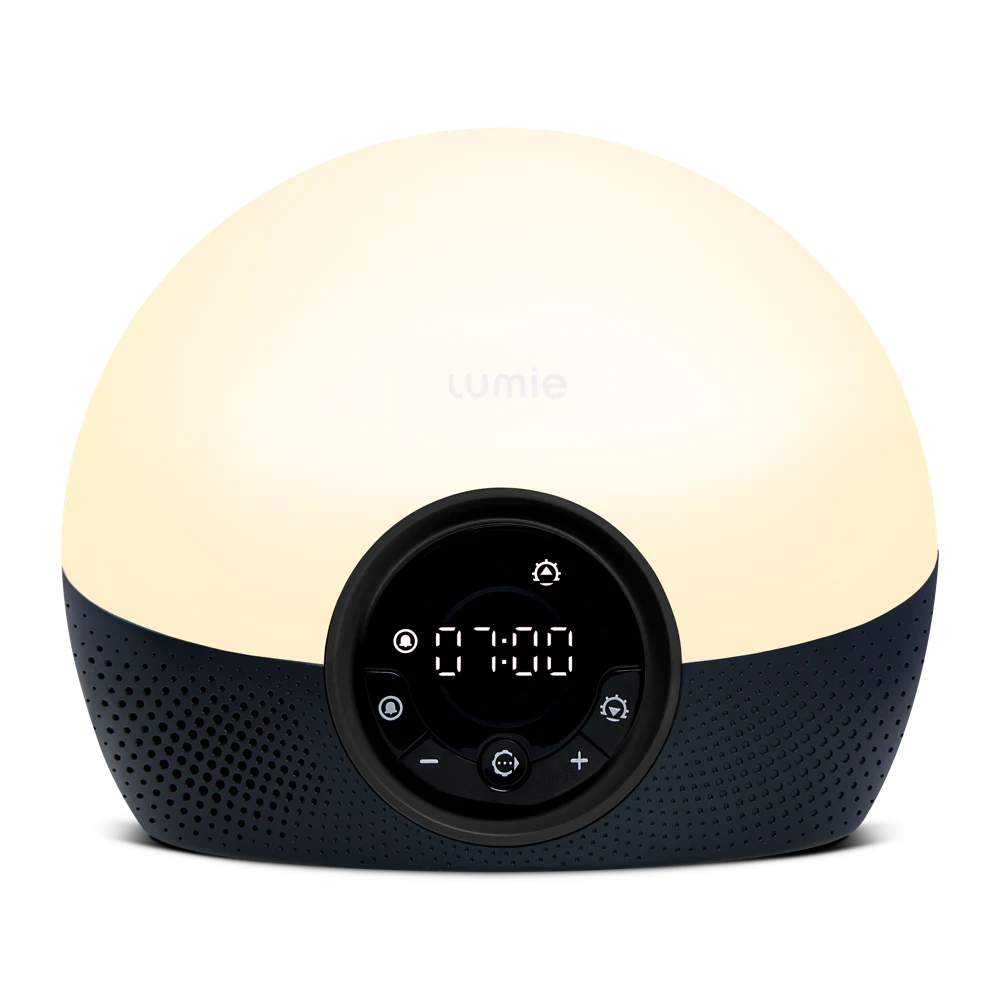
Why we recommend it: The Lumie Bodyclock Glow 150 is our overall starting point because it offers the central wake-up-light features without making a phone app the center of the purchase. You get sunrise and sunset functions, a selection of built-in sounds and a display that dims with the room.
Lumie lists 20-, 30- and 45-minute sunrise or sunset durations and ten sleep/wake sounds. Those options provide a useful middle ground between a fixed-duration basic clock and a more elaborate connected sound system. Adjust the final light intensity for your room rather than assuming the brightest setting is always preferable.
We would choose the Glow 150 for a bedside routine that stays on the clock itself. Compare the Spark 100 if a fixed 30-minute transition and simple beep are enough, or the Shine 300 if radio and more scheduling choices are important. The Glow earns the overall position for its balance of functions, not a claim that it improves everyone’s sleep.
Key specifications
- Sunrise / sunset duration: 20, 30 or 45 minutes
- Audio: Ten built-in sleep/wake sounds
- Display: Light-sensitive auto-dimming
- Design route: Standalone bedside controls
What we like
- Useful duration choices without a phone-first workflow.
- Built-in sounds and a dimming display.
Potential drawbacks
- No streaming speaker role.
- More features than a simple beep-only purchase needs.
Who should buy it: People who want a self-contained sunrise clock with several durations and sounds.
Who should compare alternatives: Shoppers who want radio, streaming audio or the simplest fixed-duration model.
Best Sunrise Alarm Clock for App-Customized Routines: Hatch Restore 3

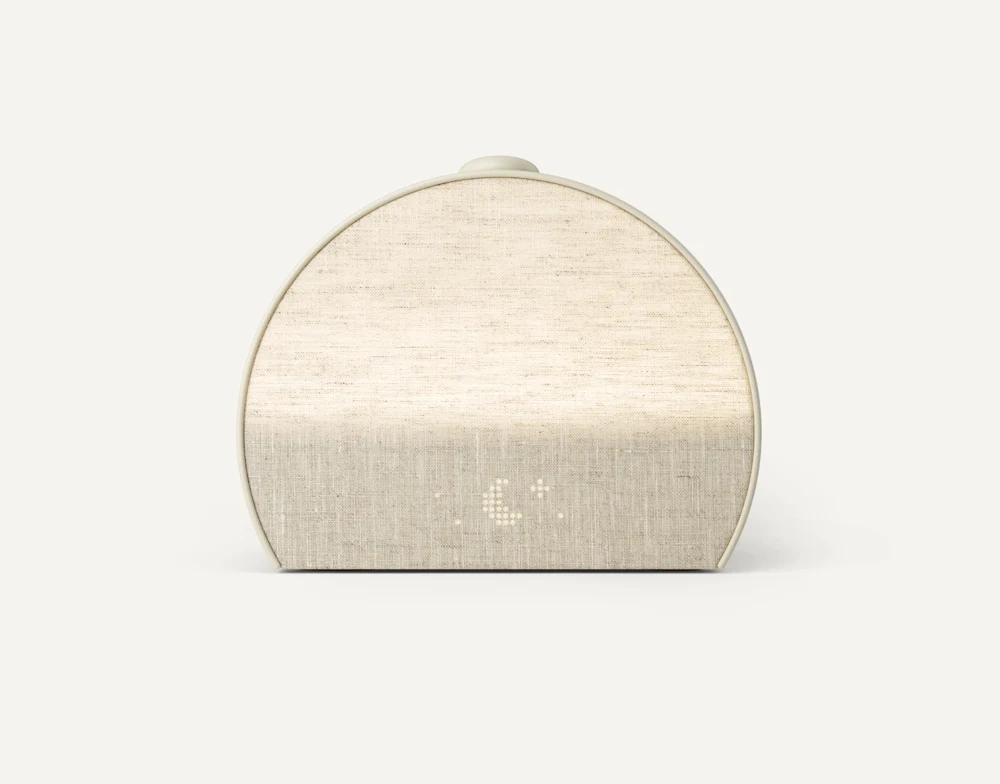
Why we recommend it: The Hatch Restore 3 is the connected routine-building comparison. Its appeal is combining a sunrise alarm, sound-machine functions and customizable evening settings in a bedside device that you can operate with physical controls after setup.
You use the Hatch Sleep app to configure the clock. The important purchase distinction is between included core functions and optional Hatch+ content. Hatch’s support information says the sunrise alarm and a selection of sounds remain available without membership. A larger library of routines and additional audio is part of the paid service.
Choose it if you value that app-managed system and are comfortable with its Wi-Fi and account requirements. Do not buy it believing that every advertised audio program is permanently included for free. Compare the Lumie Bodyclock Glow 150 if you want the settings and built-in sounds to remain on a conventional standalone clock. Restore 3 is a sound-and-light routine device, not a sleep-tracking claim in this guide.
Key specifications
- Functions: Sunrise alarm, light and sound routines
- Setup: Hatch Sleep app; Wi-Fi requirements apply
- Core use: Sunrise and included sounds without Hatch+
- Optional cost: Hatch+ adds premium content
What we like
- App customization with physical bedside controls.
- Core sunrise operation does not require a paid membership.
Potential drawbacks
- App/account setup is part of the purchase.
- Expanded audio content carries an optional ongoing cost.
Who should buy it: People who want app-managed light and audio routines and understand the membership split.
Who should compare alternatives: Buyers who want no app, no account or no recurring content offers.
Best Sunrise Alarm Clock for Simple App-Free Use: Lumie Bodyclock Spark 100
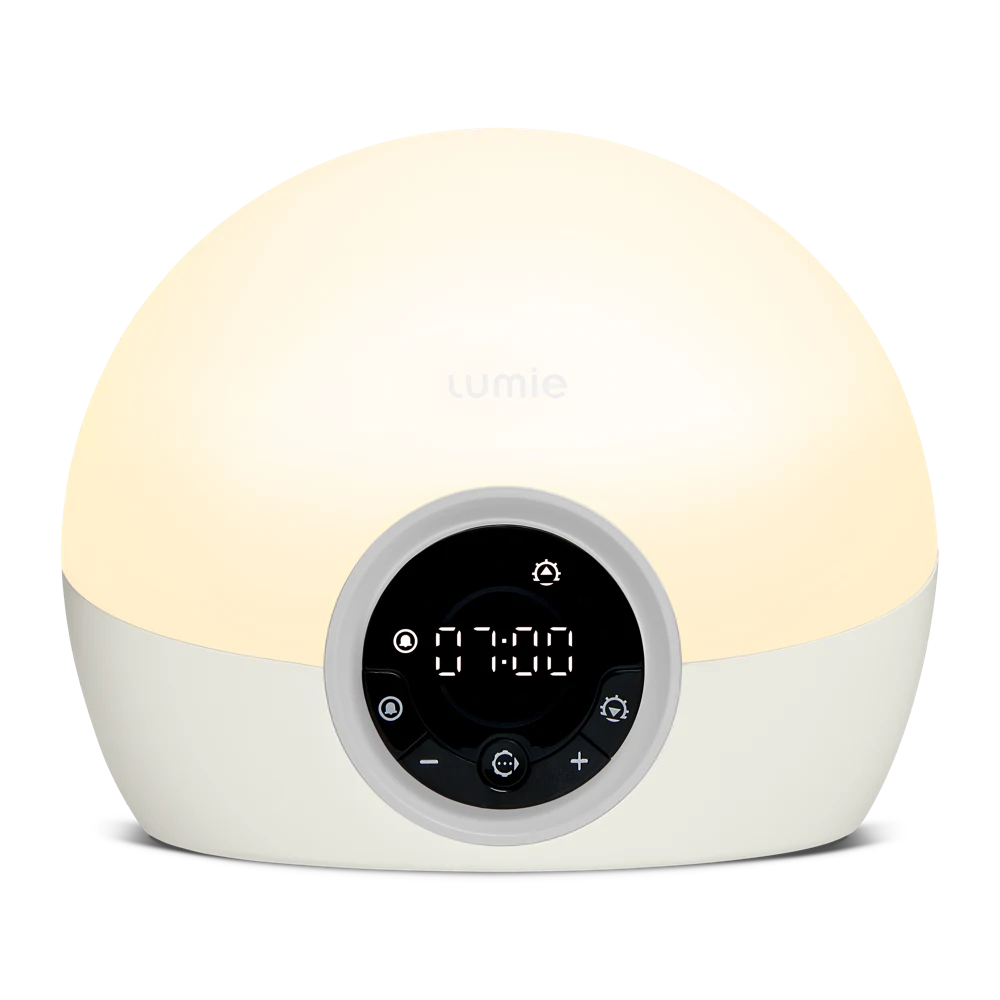
Why we recommend it: The Lumie Bodyclock Spark 100 is our simple app-free comparison. Its fixed 30-minute sunrise and sunset functions keep the decision focused on light timing rather than a large library of audio programs or connected services.
The US product page lists an optional alarm beep, adjustable final light intensity, tap snooze and fade-to-off or nightlight options. That is a useful set of functions for a shopper who wants a light-based start and a conventional sound backup. The auto-dimming display is also worth considering if a bright clock face is the part of the current bedside setup you dislike.
Choose the Spark when simplicity is intentional. If you later decide you want different transition durations and nature sounds, the Glow 150 already includes those features. Compare the two complete prices before assuming you should buy the simplest model now and upgrade shortly afterward. We would not pay for extra audio choices if you already know an optional beep is all you want.
Key specifications
- Sunrise / sunset duration: 30 minutes
- Sound: Optional alarm beep
- Display: Light-sensitive auto-dimming
- Evening options: Fade to off or nightlight
What we like
- A clear basic light-and-beep feature set.
- No app-dependent content selection.
Potential drawbacks
- Fixed transition duration.
- No selection of nature sounds or radio.
Who should buy it: Buyers who want a straightforward standalone light with an optional beep.
Who should compare alternatives: People who specifically want flexible transition lengths or multiple sound choices.
Best Sunrise Alarm Clock for FM Radio and Weekly Alarms: Lumie Bodyclock Shine 300
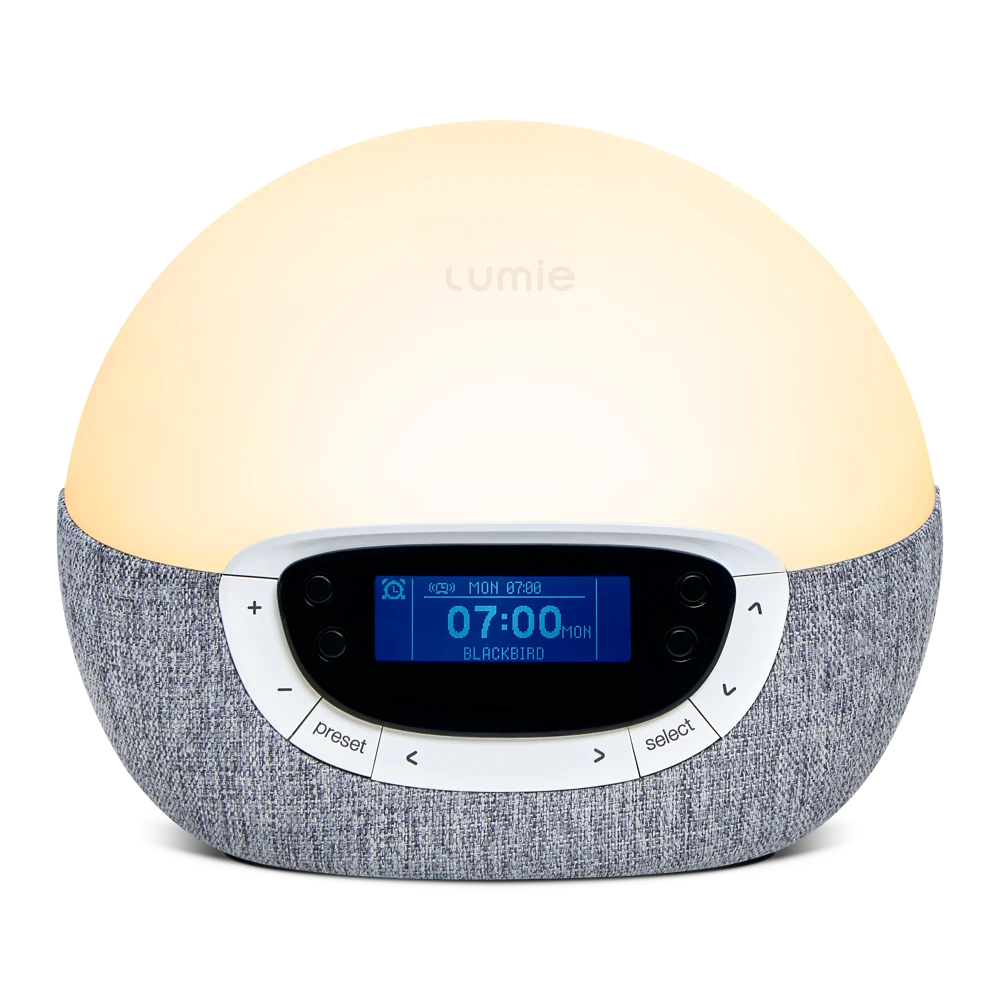
Why we recommend it: The Lumie Bodyclock Shine 300 is the next comparison when a basic dawn light is not enough but you still prefer a standalone bedside clock. Its FM radio and daily/weekly alarm options give it a distinct reason to buy over the Glow 150.
Lumie lists a 15-to-90-minute sunrise and sunset range, along with fifteen built-in sleep/wake sounds. That wider adjustment range is useful to compare if you want a longer transition on some mornings or a particular evening fade. The weekly scheduling option also deserves attention if weekday and weekend routines differ.
We would select the Shine for those specific features, not just because it sits higher in the range. If FM reception is weak where the clock will sit, the radio may add less value than expected. If you mainly want Bluetooth speaker playback, compare the Luxe 700FM. Decide which audio source you actually want at the bedside before paying for several alternatives.
Key specifications
- Sunrise / sunset duration: 15–90 minutes
- Built-in sounds: Fifteen
- Radio: FM
- Scheduling: Daily / weekly alarm options
What we like
- Flexible transition duration and weekly scheduling.
- Radio alongside built-in sounds.
Potential drawbacks
- FM usefulness depends on reception at the bedside.
- Additional features cost more than a basic light-and-beep model.
Who should buy it: People who want standalone weekly alarms, adjustable durations and FM radio.
Who should compare alternatives: Buyers who only need a basic sunrise or prefer streaming rather than radio.
Best Sunrise Alarm Clock for Bluetooth Audio: Lumie Bodyclock Luxe 700FM
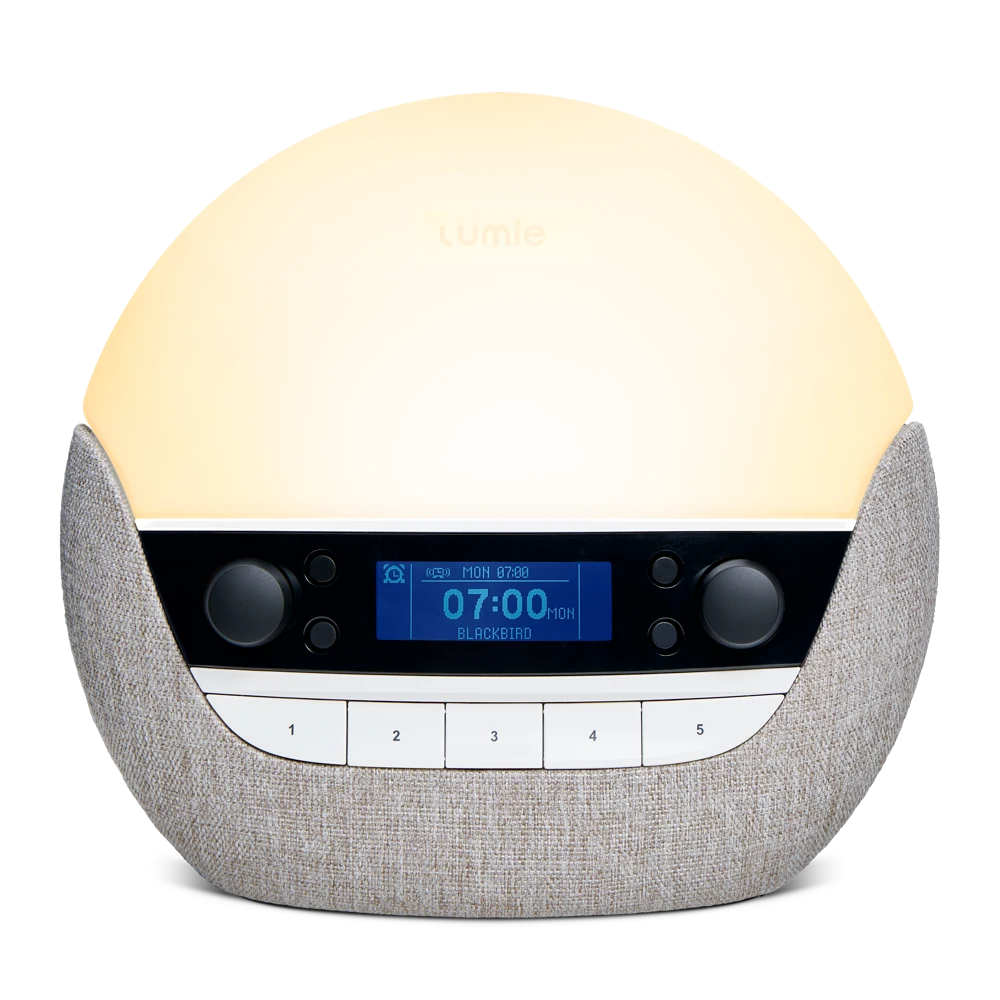
Why we recommend it: The Lumie Bodyclock Luxe 700FM is the premium standalone-clock comparison for shoppers who want Bluetooth speaker functions as well as sunrise and sunset routines. It is more relevant when a bedside speaker is already on the shopping list.
Lumie lists a 15-to-90-minute transition range, more than twenty-five built-in sleep/wake sounds, FM radio and Bluetooth speakers. The useful distinction is between built-in clock content and audio played from another device. Bluetooth playback should not be confused with an app that independently controls every alarm setting.
Compare the complete cost with buying a simpler sunrise clock and a separate speaker. An integrated device can reduce the number of things on a nightstand, but it also combines jobs in one purchase. If the main requirement is simply waking with light, the Glow 150 may be sufficient. We would buy the Luxe for its broader audio role, not presume a premium price delivers a better sleep outcome.
Key specifications
- Sunrise / sunset duration: 15–90 minutes
- Audio: 25+ built-in sounds; Bluetooth speakers
- Radio: FM
- Scheduling: Daily / weekly alarm options
What we like
- Speaker, radio and dawn-light functions in one device.
- A broad built-in sound selection.
Potential drawbacks
- Premium features may be unnecessary for a basic alarm.
- Bluetooth playback is different from full app-controlled scheduling.
Who should buy it: Buyers who want a standalone sunrise clock with a useful bedside audio role.
Who should compare alternatives: People who already own a suitable speaker or want a smaller simpler clock.
Best Sunrise Alarm Clock for Traditional Dawn-Light Controls: Philips SmartSleep Wake-up Light HF3520/60

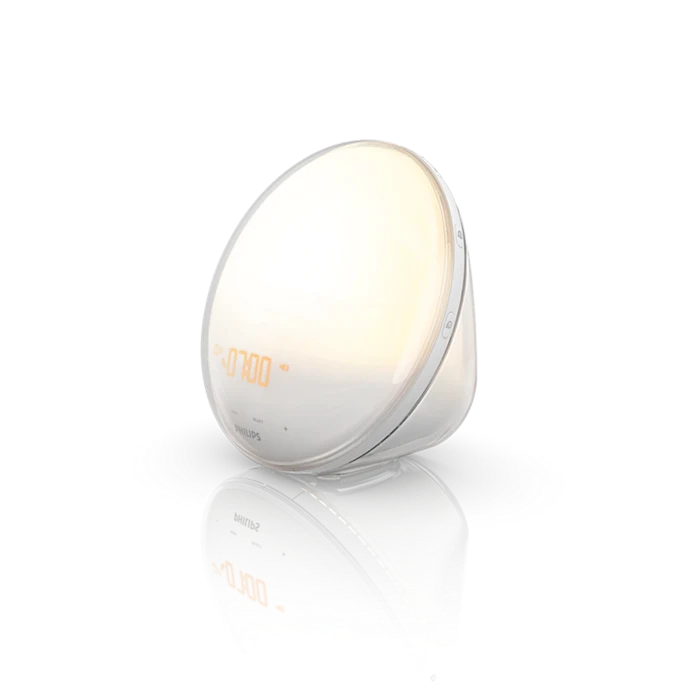
Why we recommend it: The Philips SmartSleep Wake-up Light HF3520/60 is a traditional dawn-light model to compare if you want an established physical-control format rather than a phone-first routine device. The exact model number matters because Philips sells several similar-looking lights with different features.
This US model combines a simulated sunrise with natural wake-up sounds and FM-radio functionality. Treat the controls and brightness adjustment as personal fit checks: the clock needs to be readable from your bed, while the light should be positioned where it is useful rather than blocked behind other objects.
We would compare the HF3520/60 with the Lumie Glow 150 and Shine 300 based on the specific sounds, scheduling and bedside layout you prefer. Check that a marketplace listing names HF3520/60 rather than a lower-feature Philips model. Also compare the price with current alternatives; an older well-known model is not automatically good value if a seller charges a scarcity premium.
Key specifications
- US model: HF3520/60
- Functions: Sunrise simulation and bedside light
- Audio: Built-in wake-up sounds and FM radio
- Buying check: Exact model, power adapter and current seller
What we like
- A physical-control alternative to app-first devices.
- Light and audio wake-up functions in one clock.
Potential drawbacks
- Similar Philips names can conceal feature differences.
- Compare current pricing rather than paying for model familiarity.
Who should buy it: Shoppers who prefer a conventional dawn-light clock with physical controls.
Who should compare alternatives: Buyers who want app routines or cannot find the exact model at a sensible complete price.
Best Sunrise Alarm Clock for Evening Light Routines: Philips SmartSleep Sleep and Wake-Up Light HF3650/60

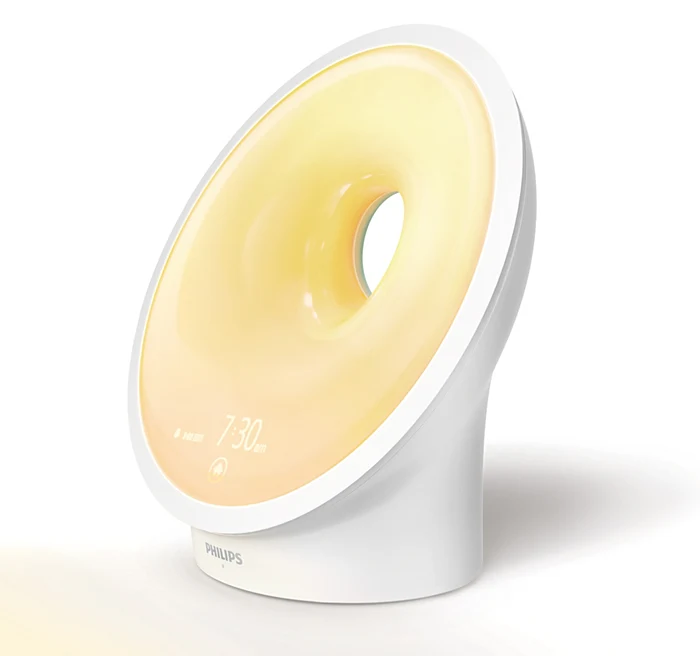
Why we recommend it: The Philips SmartSleep Sleep and Wake-Up Light HF3650/60 is the evening-routine comparison, with sunrise and sunset functions plus the brand’s RelaxBreathe light-guided feature. It was previously known as Somneo, which is useful to know when searching older product descriptions.
The additional feature is a reason to consider it only if you expect to use a light-guided wind-down routine. It is not a promise to treat insomnia or another sleep condition. Compare the clock’s everyday controls and the space it needs on the nightstand alongside the extra modes.
Be careful with Philips variants: HF3650/60 is not interchangeable with every connected SmartSleep model or every product described as Somneo. We would compare it with the Lumie Shine 300 for a fuller standalone feature set, and with Hatch Restore 3 if app-managed audio routines are the priority. Buy the exact functions you intend to use rather than the broadest sleep-related marketing description.
Key specifications
- US model: HF3650/60; formerly Somneo
- Light functions: Simulated sunrise and sunset
- Additional feature: RelaxBreathe light-guided routine
- Audio: Multiple built-in light / sound options
What we like
- A defined evening feature alongside the sunrise alarm.
- Standalone functions without assuming a content subscription.
Potential drawbacks
- More modes than a basic wake-up light requires.
- Similar Philips variants need careful checking.
Who should buy it: Buyers who specifically want a standalone evening light routine as well as a sunrise alarm.
Who should compare alternatives: Shoppers who only want a simple beep-and-light clock or phone-controlled audio content.
Best Sunrise Alarm Clock for Basic Light and Beep: Philips Wake-up Light HF3500/60
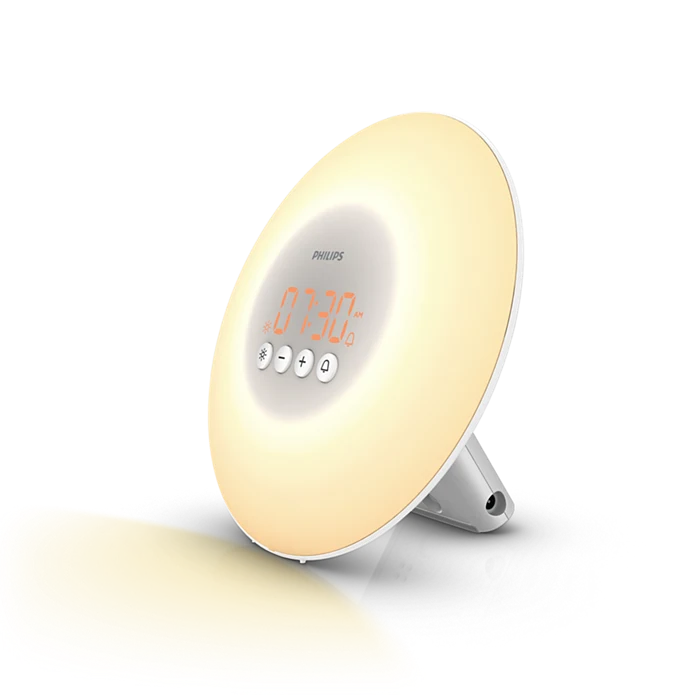
Why we recommend it: The Philips Wake-up Light HF3500/60 is a basic-model comparison for buyers who want a gradual light and a beep rather than extensive audio choices. Its limited feature set is the reason to consider it, provided the complete price and seller conditions make sense.
Philips lists a 30-minute sunrise simulation, a beep alarm, tap snooze and ten bedside-light brightness levels. Do not mistake it for the HF3520/60 simply because both are round Philips wake-up lights. A nature-sound library, FM radio or sunset feature should not be assumed from a photograph of the product family.
This is an older model, so check current availability, included US power supplies and return conditions before ordering. We would compare it with the Lumie Spark 100 rather than pay a premium for an older listing. Its purchase case is basic light-and-beep operation at a reasonable total price; if that is not available, a current alternative is the better choice.
Key specifications
- US model: HF3500/60
- Sunrise duration: 30 minutes
- Audio: Beep alarm
- Bedside lighting: Ten brightness levels
What we like
- A clearly defined basic light-and-beep option.
- Brightness settings and tap snooze.
Potential drawbacks
- Older model; inspect current seller and included adapter.
- Do not assume the richer features of other Philips models.
Who should buy it: People who want a basic dawn light and can find a sensible complete US listing.
Who should compare alternatives: Buyers who need nature sounds, FM radio or broader evening functions.
Best Sunrise Alarm Clock for Small Nightstands: Lexon Mina Sunrise

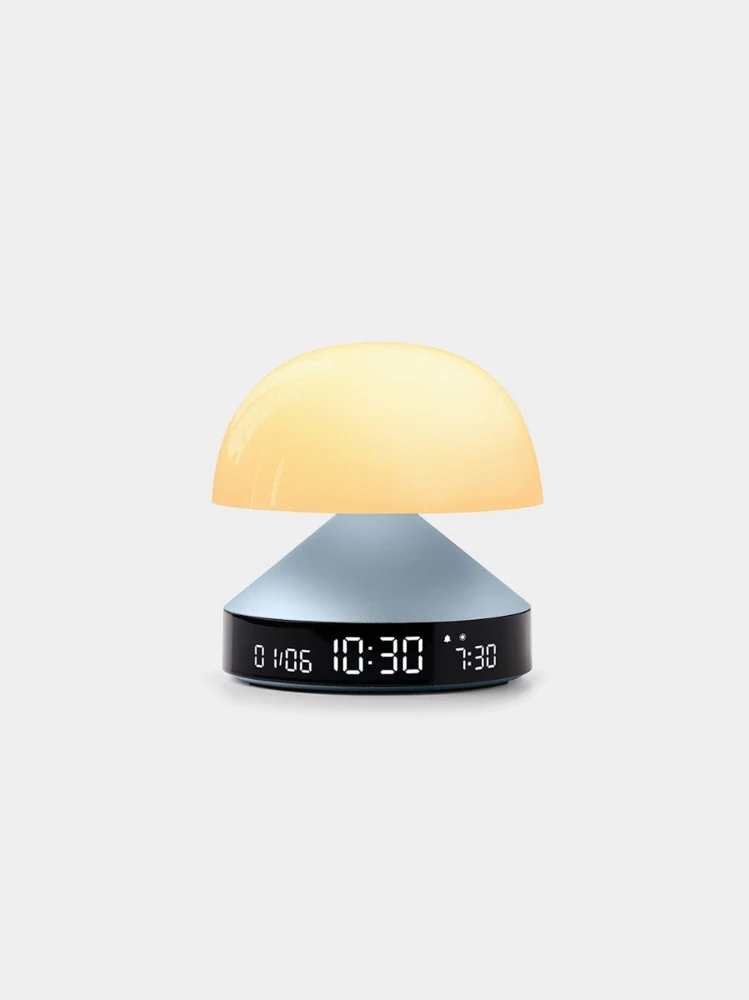
Why we recommend it: The Lexon Mina Sunrise is our compact-design comparison. Its published dimensions are approximately 4.33 inches across and high, making it worth considering when a large dome-shaped clock would dominate the available bedside space.
Lexon combines a sunrise alarm, sunset mode and a lamp with nine LED colors. USB-C charging and a rechargeable battery distinguish it from mains-only bedside lights. The battery claims depend on the mode used: a sound-only alarm has a different stated endurance from repeated sunrise or lamp operation.
We would choose the Mina for space and design, not assume a small lamp lights a room like a larger bedside device. Plan where you will charge it and how often you will actually use the light. If dependable daily use matters more than a cordless appearance, keeping an appropriate power connection available may be more practical than relying on a headline battery-duration figure.
Key specifications
- Dimensions: Approximately 4.33 × 4.33 inches
- Functions: Sunrise, sunset and nine-color lamp
- Audio: Five melodies / natural sounds
- Power: Rechargeable; USB-C supply / charging
What we like
- Compact footprint for a small nightstand.
- Rechargeable power and a decorative lamp role.
Potential drawbacks
- Battery endurance varies substantially with light use.
- Compact size should not be treated as a room-brightness guarantee.
Who should buy it: Buyers who prioritize a small bedside footprint and a rechargeable decorative lamp.
Who should compare alternatives: People who want a large standalone sound library or do not want to manage charging.
Best Sunrise Alarm Clock for Connected Bedside Audio: WiiM Wake-up Light

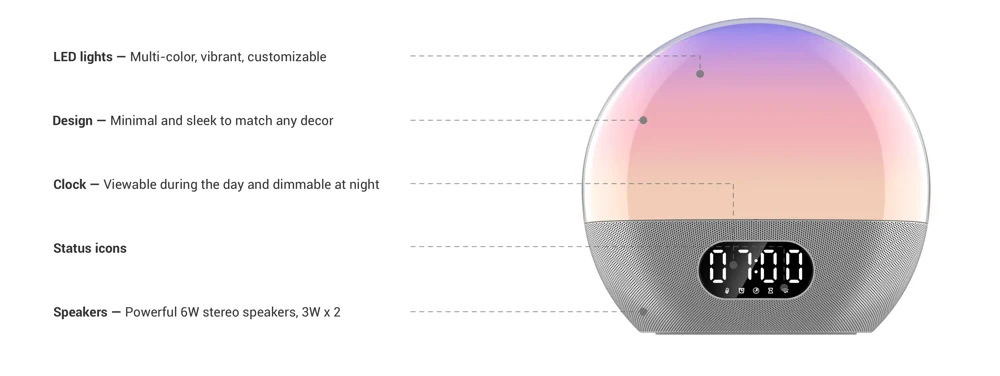
Why we recommend it: The WiiM Wake-up Light is the connected-audio option to compare if you want a sunrise light and a networked bedside speaker in the same device. WiiM lists app-controlled routines, Bluetooth playback, Wi-Fi music services and Alexa integration.
Its attraction is audio flexibility rather than a simple alarm-clock workflow. Alexa requires signing into an Amazon account, while the light can be controlled in the WiiM Light app without Alexa. Streaming services may require their own subscriptions, so an extensive list of supported services is not the same as included free music.
Before buying, confirm the current app availability and support for the particular music-alarm routine you want. Playback support, alarm scheduling and multi-room functions are separate features, and software can change over time. We would compare it with the Lumie Luxe 700FM if simple Bluetooth playback is enough, or choose a standalone Lumie model if removing connected devices from the bedroom is the priority.
Key specifications
- Light functions: Sunrise, sunset and app-controlled modes
- Audio connections: Wi-Fi and Bluetooth
- Voice assistant: Alexa; Amazon account required to enable it
- App: WiiM Light for light settings and routines
What we like
- Networked audio and light functions in one device.
- Can be controlled through the app without enabling Alexa.
Potential drawbacks
- App, network and service compatibility add setup complexity.
- Streaming subscriptions and current support need checking.
Who should buy it: Shoppers who specifically want connected bedside audio alongside a wake-up light.
Who should compare alternatives: Buyers who want a simple app-free clock or guaranteed access to every advertised music service.
Sunrise Alarm Clock Comparison
| Product | Light timing / role | Audio options | Setup and ongoing costs |
|---|---|---|---|
| Lumie Bodyclock Glow 150 | 20 / 30 / 45 minutes | Ten built-in sounds | Standalone; no content membership |
| Hatch Restore 3 | App-customized | Included sounds; premium library optional | App / Wi-Fi; Hatch+ optional |
| Lumie Bodyclock Spark 100 | 30 minutes | Optional beep | Standalone; no content membership |
| Lumie Bodyclock Shine 300 | 15–90 minutes | Fifteen sounds + FM | Standalone; no content membership |
| Lumie Bodyclock Luxe 700FM | 15–90 minutes | 25+ sounds, FM and Bluetooth | Standalone clock; phone for Bluetooth playback |
| Philips SmartSleep Wake-up Light HF3520/60 | Model-specific sunrise | Built-in sounds + FM | Standalone; verify US model |
| Philips SmartSleep Sleep and Wake-Up Light HF3650/60 | Sunrise + sunset | Multiple built-in sounds | Standalone; model-specific features |
| Philips Wake-up Light HF3500/60 | 30 minutes | Beep | Standalone; older model availability check |
| Lexon Mina Sunrise | Sunrise + sunset | Five melodies / sounds | USB-C; rechargeable |
| WiiM Wake-up Light | App-controlled routines | Bluetooth / supported streaming services | App / Wi-Fi; service costs may apply |
How to Choose a Sunrise Alarm Clock
Separate standalone controls from app setup
An app-free clock is appealing when you want fewer phone interactions at bedtime. You set the alarm directly on the device and use its built-in light and sound functions. The Lumie Bodyclock Glow 150 and Spark 100 take this approach.
A connected device such as Hatch Restore 3 or WiiM Wake-up Light can provide more elaborate routines, but it also introduces accounts, network setup and ongoing software compatibility. Check the app on your actual phone before buying. Physical bedside buttons are useful after setup; they do not necessarily remove the original app requirement.
Choose the light transition you want
Some buyers are happy with a fixed 30-minute sunrise. Others want a shorter or longer transition depending on their morning schedule. The Lumie Spark 100 has a fixed duration, the Glow 150 offers three choices, and the Shine 300 provides a broader adjustable range.
Use the adjustable intensity and placement to suit your own room. A clock behind a stack of books or facing away from the bed may be less useful than a carefully placed simpler model. We have not measured comparative brightness, so do not read the product order as a ranking of how much light each clock produces.
Check the clock display and alarm controls
The light used to wake you and the display visible all night are separate things. If a bright clock face bothers you, look for documented dimming or an off setting. The Lumie Glow 150 and Spark 100 list light-sensitive display dimming; confirm the behavior in the manual rather than assuming every dim-looking product photograph shows the lowest setting.
Check how you turn the next alarm on, confirm its time and snooze or dismiss it. Those routine controls matter more than a feature you use once during setup. If different people use the room, consider whether another person can understand the clock without signing into your phone account.
Calculate hardware and subscription costs separately
Hatch Restore 3 includes core sunrise functions and selected sounds without Hatch+, while additional content uses the optional membership. Decide whether the included set is enough before paying for the hardware. A free trial should be treated as a trial, not permanent access to every program.
WiiM Wake-up Light supports several streaming routes, but paid music services have their own terms and costs. A standalone Lumie model provides a different value calculation: the built-in sound set is limited, but you are not buying access to a continually expanding content subscription. Compare the features you intend to use over a year, not just the first checkout price.
Which Wake-Up Light Fits Your Bedroom?
For a small nightstand, measure the available surface and leave space for the power or charging cable. The Lexon Mina Sunrise is compact, but size alone does not establish how bright it will feel from your pillow. Position and preferred intensity still matter.
For a conventional radio alarm, the Lumie Shine 300 or Philips HF3520/60 is a more focused comparison than a connected streaming device. FM reception depends on the room and antenna placement, so compare radio only if that is an audio source you actually use.
For a bedside speaker as well as an alarm, compare the Lumie Luxe 700FM with the WiiM Wake-up Light. Bluetooth audio from a phone is simpler than configuring networked services and alarm routines. If you already own a speaker you like, a separate simpler wake-up light may be better value.
For shared bedrooms, remember that sunrise light can reach someone who is not using the alarm. Think about the schedule and placement before choosing a large bright bedside device. A product should fit the household routine rather than assume that everyone wants the same wake-up time.
A clearer bedside layout can make a new clock easier to use. If you are organizing chargers, spare cables and drawers at the same time, our portable label maker guide compares practical storage-label options. Keep the clock’s own controls accessible rather than surrounding it with more devices.
How We Selected These Products
Tea Buster compared official US product pages and model-specific support information, including sunrise timing, built-in sounds, display behavior, setup requirements and optional memberships. We selected distinct buying roles rather than ranking models using unmeasured sleep benefits. We have not independently slept beside or tested these clocks. Older models and connected products require particular attention to current seller conditions, software support and exact version numbers. Amazon links open searches for the named model rather than a guaranteed single listing.
Frequently Asked Questions
What is the best sunrise alarm clock without a subscription?
The Lumie Bodyclock Glow 150 is our overall standalone comparison, with several transition durations and built-in sounds. The Spark 100 is a simpler light-and-beep option. Hatch Restore 3 can also run core sunrise functions without Hatch+, but extra audio content belongs to its optional membership.
Does Hatch Restore 3 need a paid membership?
Not for its core sunrise alarm and included sounds. Hatch Restore 3 uses the Hatch Sleep app for setup, while Hatch+ expands the content library. Confirm which particular sounds and routines are included before buying. A connected setup requirement and a paid content requirement are two different questions.
Can I use a sunrise alarm clock without an app?
Yes. The Lumie Bodyclock Spark 100 and Glow 150 use standalone bedside controls. The Philips HF3520/60 is another physical-control comparison. If avoiding phone setup is your priority, do not choose Hatch Restore 3 simply because it has physical buttons for nightly use after configuration.
Which sunrise alarm clock is best for a small nightstand?
The Lexon Mina Sunrise is our compact comparison, with dimensions of about 4.33 inches across and high. Measure your available space and allow room for charging. Its battery endurance depends on whether you use the light, sunrise function or sound-only alarm; do not apply the longest claim to every mode.
Is Lumie Glow 150 or Shine 300 the better buy?
Choose the Lumie Bodyclock Glow 150 if three transition durations and ten built-in sounds meet your needs. Compare the Shine 300 for FM radio, a broader timing range and daily/weekly scheduling. The higher-feature model is worth paying for only if those functions fit your routine.
Is a sunrise alarm reliable for heavy sleepers?
We have not tested heavy-sleeper wake-up reliability. A Lumie Glow 150 or Philips HF3520/60 combines light with sound, but response is individual. If waking on time is critical, retain a reliable backup alarm while you evaluate any new clock. Do not treat a product category label as a guarantee.
Can a sunrise alarm clock replace a light-therapy lamp?
Do not assume so. Devices such as the Lumie Spark 100 are sold here as wake-up lights with alarm functions. A therapeutic light has different specifications and a different intended role. Choose a sunrise clock for its consumer alarm features rather than using this buying guide to select treatment.
Which clock should I compare for music playback?
Compare the Lumie Bodyclock Luxe 700FM for Bluetooth speaker playback and FM radio, or the WiiM Wake-up Light for connected audio services. Confirm current app and service compatibility, and distinguish playing music from scheduling a music alarm. Supported services can have separate subscription costs.
Which One Should You Buy?
Start with the Lumie Bodyclock Glow 150 for a balanced standalone clock. Choose the Spark 100 for a simpler light-and-beep routine, Hatch Restore 3 for app-customized light and audio, or Lexon Mina Sunrise for a compact nightstand. Move to the Shine 300 or Luxe 700FM when radio, broader timing or speaker functions are specific priorities. Check the exact US model, included sounds and total ongoing cost before buying; a clock you understand and use consistently is a stronger purchase than an elaborate system chosen for its marketing alone.
Related Reading